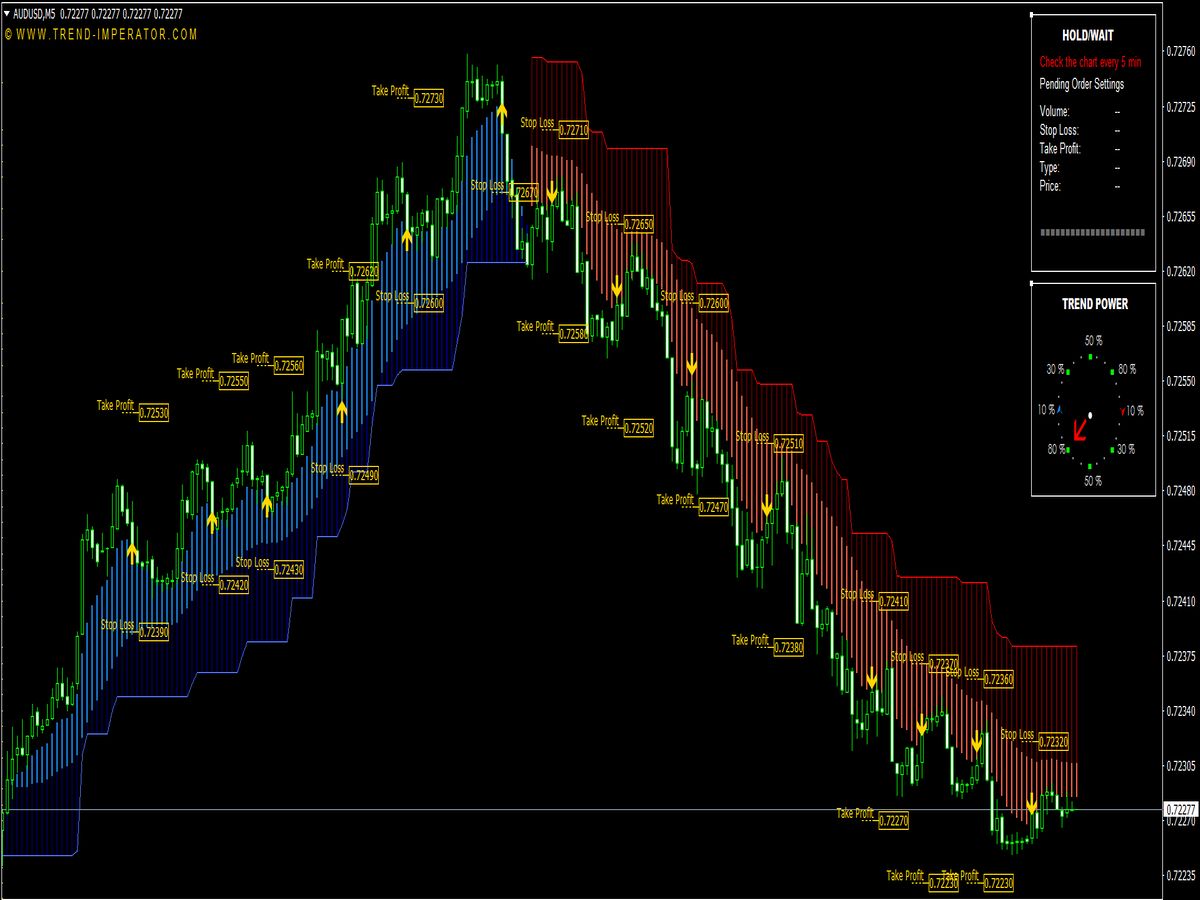
Forex trading can look exciting from the outside: fast-moving charts, clean candle formations, leverage, and the feeling that there is always another setup around the corner. For beginners, though, the goal is not to hunt for a “magic” strategy. The real work is building a simple, repeatable trading process that protects your capital while teaching you how price actually moves.
This guide walks through practical Forex trading strategies for beginners, including trend following, support and resistance, breakout trading, moving averages, price action, swing trading, and risk-management rules. It also includes trader-focused tips, checklists, comparison tables, notes, and FAQs to help you build a foundation that can be tested on MetaTrader without cluttering your charts.
⚠️ Important Risk Note
Forex trading involves substantial risk and is not suitable for every trader. Beginners should practice on a demo account first, use small position sizes, avoid emotional overtrading, and never risk money they cannot afford to lose. This article is for educational purposes only and is not financial advice.
📌 What Makes a Good Forex Strategy for Beginners?
A beginner-friendly Forex strategy should be simple, easy to test, and based on clear rules. Many new traders struggle because they jump between systems too quickly, load the chart with too many indicators, or place trades without knowing exactly where the risk is.
The best beginner strategies usually share the same qualities:
- Clear entry rules: You know exactly why you are entering the trade.
- Clear exit rules: You know where to take profit and where to exit if the setup fails.
- Controlled risk: You risk only a small percentage of your account per trade.
- Simple chart structure: You avoid overcrowding the chart with unnecessary indicators.
- Repeatability: The strategy can be practiced, reviewed, and improved over time.
💡 Pro Tip
For beginners, the best strategy is not the one that promises the highest possible profit. It is the one you can understand, follow consistently, and execute without emotional confusion when price starts moving fast.
📈 Strategy 1: Trend Following
Trend following is one of the most practical Forex strategies for beginners because it is built on a simple market truth: trade in the direction of the dominant move. If price is printing higher highs and higher lows, buyers are controlling the structure. If it is printing lower highs and lower lows, sellers are controlling the structure.
✅ How It Works
Identify the market direction first, then look for entries that align with that direction. Beginners often use trendlines, moving averages, or swing highs and lows to define the trend directly on the MetaTrader chart.
🧭 Best For
Trend following suits beginners who want a structured approach and prefer not to predict reversals. It works best when price has clear momentum and pullbacks are respecting the broader direction.
Basic Trend-Following Rules
- Choose a major currency pair such as EUR/USD, GBP/USD, USD/JPY, or AUD/USD.
- Open the 4-hour or daily chart to identify the main trend.
- Look for price trading above a moving average in an uptrend or below it in a downtrend.
- Wait for a pullback instead of chasing price after a strong candle.
- Enter only when price starts moving back in the trend direction.
- Place a stop-loss beyond the recent swing high or swing low.
✅ Beginner Advantage
Trend following helps beginners avoid one of the most expensive mistakes: fighting the market. Instead of trying to pick tops and bottoms, you learn to follow strength and let market structure guide the trade.
🧱 Strategy 2: Support and Resistance Trading
Support and resistance are key price zones where the market has previously reacted. Support is an area where buyers may step in, while resistance is an area where sellers may appear. This strategy teaches beginners to read price levels instead of depending only on indicators.
🟢 Support
A price area where buying pressure has previously appeared. Traders watch support for possible bounce setups or failed breakdowns.
🔴 Resistance
A price area where selling pressure has previously appeared. Traders watch resistance for potential rejection or breakout opportunities.
🔁 Role Reversal
When resistance breaks, it may become support. When support breaks, it may become resistance. This is one of the most useful beginner concepts for reading retests.
Simple Support and Resistance Trading Idea
Instead of buying randomly, a beginner can wait for price to reach a major support zone and show signs of rejection. Instead of selling randomly, a trader can wait for price to reach resistance and show weakness. The level gives context, but the reaction gives the trade idea.
- Mark the most obvious support and resistance zones.
- Use higher timeframes for stronger levels.
- Wait for confirmation such as a rejection candle or strong close.
- Avoid placing trades directly in the middle of a range.
- Keep stop-losses outside the zone, not directly on the level.
⚠️ Common Mistake
Many beginners draw too many levels. Focus only on the most visible zones that price has clearly respected multiple times, because clean charts usually lead to cleaner decisions.
🚀 Strategy 3: Breakout Trading
Breakout trading means entering when price moves beyond a key support, resistance, range, or chart pattern. The idea is that once price escapes a consolidation area, momentum may continue in the breakout direction if traders accept the new level.
📌 Example
If EUR/USD has been trading between 1.0800 and 1.0900 for several sessions, a strong close above 1.0900 may signal a bullish breakout. A beginner may then wait for a retest of the broken level before considering a long trade.
Beginner Breakout Checklist
- Is the market clearly consolidating before the breakout?
- Did price close outside the range, or did it only spike temporarily?
- Is there enough space before the next support or resistance level?
- Is the stop-loss placed logically beyond the breakout structure?
- Is the risk-to-reward ratio acceptable before entry?
💡 Safer Breakout Idea
Beginners can reduce false breakout risk by waiting for a retest. Instead of entering immediately after price breaks a level, wait to see whether the market returns to the broken level and respects it with a controlled reaction.
📊 Strategy 4: Moving Average Strategy
Moving averages smooth price data and help traders identify the general direction of the market. For beginners, they can provide a clean visual guide on MetaTrader without making the chart too complicated.
Two common moving averages are:
- 50-period moving average: Often used to understand medium-term direction.
- 200-period moving average: Often used to understand the broader market trend.
📈 Bullish Bias
When price is above the 50 and 200 moving averages, beginners may focus mainly on buy setups and avoid forcing short trades against the trend.
📉 Bearish Bias
When price is below the 50 and 200 moving averages, beginners may focus mainly on sell setups and wait for rallies into resistance.
Simple Moving Average Pullback Strategy
- Identify a trending market.
- Confirm that price is above or below the moving average.
- Wait for price to pull back toward the moving average.
- Look for rejection or continuation signs.
- Place your stop-loss beyond the recent swing point.
- Target the next logical support or resistance area.
🕯️ Strategy 5: Price Action Trading
Price action trading focuses on reading the chart itself: candles, structure, momentum, highs, lows, and reactions at key levels. Many experienced traders prefer price action because it keeps the decision-making process close to actual market behavior instead of hiding everything behind indicators.
| Price Action Signal | What It May Suggest | Beginner Tip |
|---|---|---|
| Pin Bar | Rejection of a price level | Use it near support or resistance, not randomly. |
| Engulfing Candle | Strong shift in momentum | More useful when aligned with trend direction. |
| Inside Bar | Market compression or pause | Can be useful before breakouts. |
| Higher Highs / Higher Lows | Uptrend structure | Look for buying opportunities on pullbacks. |
| Lower Highs / Lower Lows | Downtrend structure | Look for selling opportunities on rallies. |
📝 Trading Note
A candlestick pattern is more meaningful when it appears at an important location. A pin bar at major support matters more than a pin bar floating in the middle of a noisy range.
⏳ Strategy 6: Swing Trading for Beginners
Swing trading is a slower style of trading where positions are usually held for several days. This can be attractive for beginners who cannot watch charts all day or who want to avoid the stress of very short-term trading.
✅ Benefits
- Less screen time than scalping.
- More time to analyze trades.
- Works well with higher timeframes.
- Can reduce emotional overtrading.
⚠️ Challenges
- Trades may stay open overnight.
- Price gaps and fast sessions can test discipline.
- Patience is required.
- Stop-losses may need to be wider.
A simple swing trading approach is to identify the trend on the daily chart, wait for a pullback, and use the 4-hour chart to find a cleaner entry. This keeps the strategy structured and helps avoid impulsive trades on very small timeframes.
⚖️ Forex Strategy Comparison Table
Beginner Strategy Comparison
This table compares popular beginner Forex strategies by difficulty, time commitment, and ideal use case.
| Strategy | Difficulty | Best Timeframes | Best Market Condition | Beginner Rating |
|---|---|---|---|---|
| Trend FollowingTrade with market direction | Easy to Medium | 4H / Daily | Trending markets | |
| Support & ResistanceTrade key reaction zones | Easy | 1H / 4H / Daily | Ranging or trending markets | |
| Breakout TradingTrade momentum beyond levels | Medium | 1H / 4H | Consolidation before expansion | |
| Moving Average PullbackUse averages as trend guide | Easy | 4H / Daily | Clean directional markets | |
| Price ActionRead candles and structure | Medium | 1H / 4H / Daily | All markets with clear levels | |
| Swing TradingHold trades for several days | Medium | 4H / Daily | Trending or corrective markets |
🛡️ Risk Management: The Real Beginner Strategy
Many beginners spend too much time searching for entries and not enough time managing risk. In real trading, risk management is often more important than the entry strategy itself. Even a good setup can fail if the trader risks too much, moves stop-losses emotionally, or enters without a plan.
💰 Risk Per Trade
Many beginners choose to risk only 0.5% to 1% of their account per trade while learning.
🎯 Risk-to-Reward
Look for trades where the potential reward is at least equal to or greater than the risk.
🚫 Daily Limit
Set a maximum number of losses per day to prevent emotional revenge trading.
Beginner Risk Checklist
- Do I know exactly where my stop-loss is?
- Am I risking a fixed percentage of my account?
- Is the trade worth taking based on potential reward?
- Am I entering because of my plan, not because of emotion?
- Is my take-profit placed at a logical support or resistance area?
- Would I still take this trade if I had no fear of missing out?
⚠️ Leverage Warning
Leverage can increase both profits and losses. Beginners should use leverage cautiously and focus first on survival, consistency, and process quality.
🧠 Trading Psychology Tips for Beginners
Forex trading is not only technical. It is also emotional. A beginner may know the correct setup but still lose money because of fear, greed, impatience, hesitation, or revenge trading.
😬 Fear
Fear can make you exit too early or avoid valid trades. A written plan helps reduce hesitation when the setup appears.
🔥 Greed
Greed can make you overtrade, increase lot size too quickly, or ignore your take-profit plan.
⚡ Impatience
Impatience often leads to entering before confirmation. Good trading usually requires waiting longer than feels comfortable.
📓 Discipline
Discipline means following your rules even when the market feels tempting, frustrating, or slow.
📋 Beginner Forex Trading Plan Template
A trading plan keeps your decisions consistent. Before risking real money, beginners should write down their rules and follow them on a demo account until execution feels calm and repeatable.
| Trading Plan Element | Example Rule |
|---|---|
| Currency Pairs | I will trade only EUR/USD, GBP/USD, and USD/JPY. |
| Timeframes | I will analyze the daily chart and enter on the 4-hour chart. |
| Strategy | I will use trend-following pullbacks and support/resistance zones. |
| Risk | I will risk no more than 1% per trade. |
| Trade Limit | I will take a maximum of two trades per day. |
| Review Process | I will journal every trade with screenshots and notes. |
✅ Pre-Trade Checklist
Before entering any Forex trade, ask yourself:
- Is the market trending, ranging, or breaking out?
- Is my trade aligned with the higher timeframe?
- Is price near a meaningful support or resistance level?
- Do I have a clear entry trigger?
- Do I know my stop-loss before entering?
- Do I know my take-profit target?
- Is the potential reward worth the risk?
- Am I calm and following my plan?
🚫 Common Forex Mistakes Beginners Should Avoid
- Trading without a stop-loss: This can turn a small mistake into a large loss.
- Overusing leverage: Bigger position sizes increase emotional pressure.
- Changing strategies too often: You cannot improve what you do not track consistently.
- Entering without confirmation: Fast candles can tempt traders into poor locations.
- Ignoring the higher timeframe: Small timeframe signals can be misleading.
- Revenge trading: Trying to win back losses quickly usually creates more losses.
- No trading journal: Without records, it is difficult to know what is working.
🧪 How to Test a Forex Strategy as a Beginner
Before using real money, beginners should test their strategy. Testing helps you understand whether your rules are clear, whether you can follow them, and whether the strategy fits your personality.
🔍 Backtesting
Review historical charts and mark where your strategy would have produced entries, exits, wins, and losses.
🧾 Forward Testing
Use a demo account to practice the strategy in real-time market conditions before risking real capital.
Testing Checklist
- Write down the strategy rules.
- Test at least 50 to 100 sample trades.
- Track win rate, average win, average loss, and emotional mistakes.
- Take screenshots before and after each trade.
- Review the results weekly.
- Adjust only one rule at a time.
📚 Best Currency Pairs for Beginners
Beginners usually benefit from focusing on a small number of major pairs. Major pairs often have tighter spreads and cleaner technical structure than exotic pairs, which makes execution and review easier.
| Currency Pair | Why Beginners Watch It | Note |
|---|---|---|
| EUR/USD | High liquidity and widely followed technical levels | Often suitable for support, resistance, and moving average practice. |
| GBP/USD | Strong movement and clear volatility | Can move quickly, so stop-loss placement and position size matter. |
| USD/JPY | Popular major pair with strong trends at times | Useful for practicing trend following and pullback entries. |
| AUD/USD | Often forms clean swings and technical ranges | Can be useful for practicing range structure and breakout retests. |
🧩 Which Forex Strategy Should a Beginner Choose?
If you are just starting, do not try to master every strategy at once. Choose one simple method and practice it until you can recognize the setup quickly, calmly, and without forcing trades.
💡 Simple Beginner Combination
A practical beginner approach is to combine trend following with support and resistance. First identify the higher-timeframe trend, then wait for price to pull back into a key level before looking for price action confirmation.
For example:
- The daily chart shows an uptrend.
- Price pulls back into a previous support zone.
- A bullish rejection candle appears on the 4-hour chart.
- The stop-loss goes below the support zone.
- The target is placed near the next resistance area.
❓ Forex Trading Strategies for Beginners: FAQs
❓ What is the easiest Forex strategy for beginners?
Trend following combined with support and resistance is often one of the easiest approaches because it teaches beginners to trade with structure and avoid random entries.
❓ Should beginners use indicators?
Yes, but only a few. Moving averages, RSI, ATR, and basic volume tools can be useful in MetaTrader, but beginners should avoid filling the chart with too many indicators.
❓ Is scalping good for beginner Forex traders?
Scalping can be difficult for beginners because it requires fast decisions, low spreads, emotional control, and strong execution. Many beginners may find swing trading or 4-hour setups easier.
❓ How much should a beginner risk per trade?
Many beginners start with 0.5% to 1% risk per trade while learning. The exact amount depends on account size, experience, and risk tolerance.
❓ How long does it take to become consistent in Forex?
There is no fixed timeline. Consistency depends on practice, discipline, risk management, market structure reading, and the trader’s ability to review mistakes honestly.
❓ Can beginners trade Forex with a small account?
Yes, but expectations must be realistic. A small account should be used mainly for learning execution, discipline, and risk control rather than chasing large profits.
🏁 Final Thoughts
The best Forex trading strategies for beginners are simple, structured, and risk-controlled. Trend following, support and resistance, breakout trading, moving averages, price action, and swing trading can all be useful when applied with patience and discipline.
However, no strategy works all the time. The real edge comes from combining a clear method with proper risk management, emotional control, and consistent review. Start slowly, practice on a demo account, keep a trading journal, and focus on becoming a better decision-maker before trying to become a full-time trader.
Beginner rule: protect your capital first, build consistency second, and think about profits third.
Risk Disclaimer: Trading leveraged products carries a high level of risk and can result in losses greater than expected. Always use a defined stop-loss, plan your take-profit before entry, and trade only with capital you can afford to lose. This content is educational and does not provide financial advice.