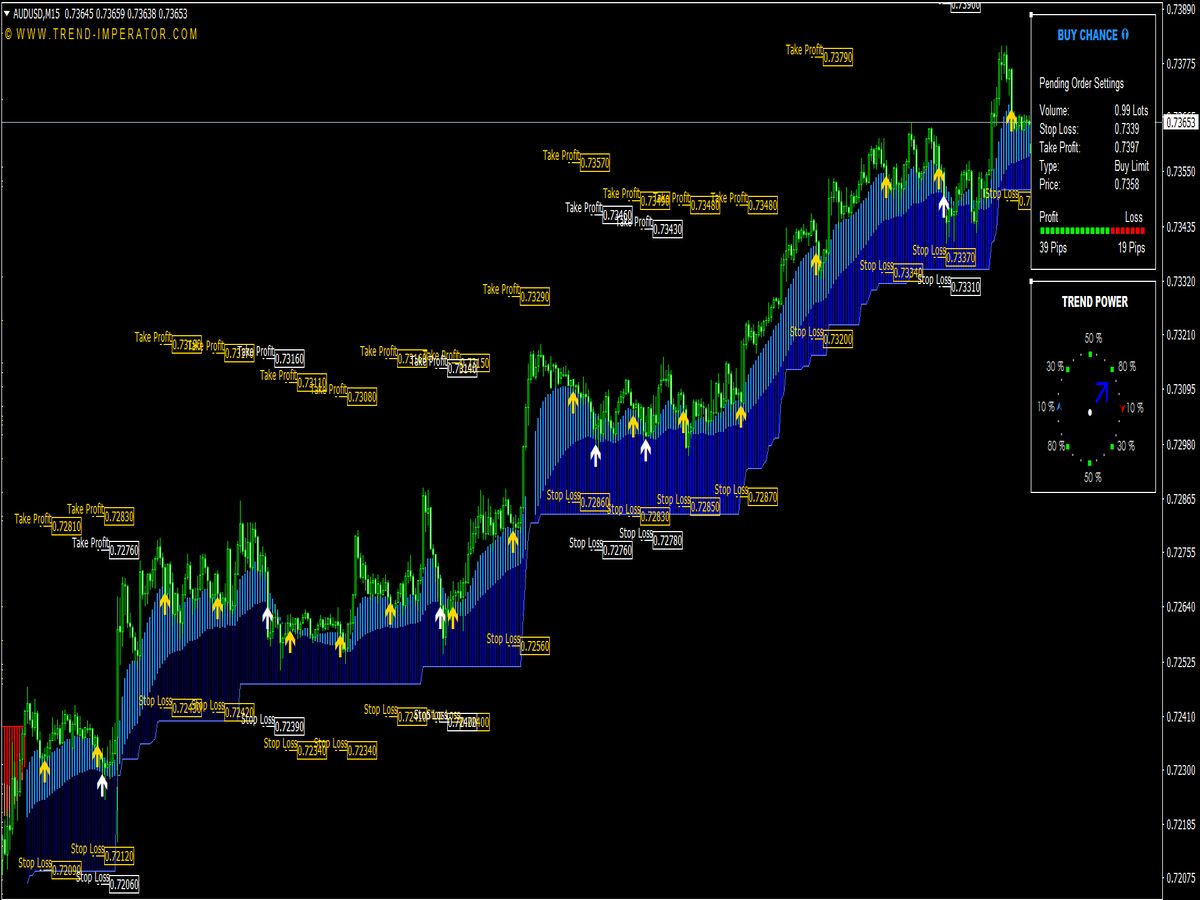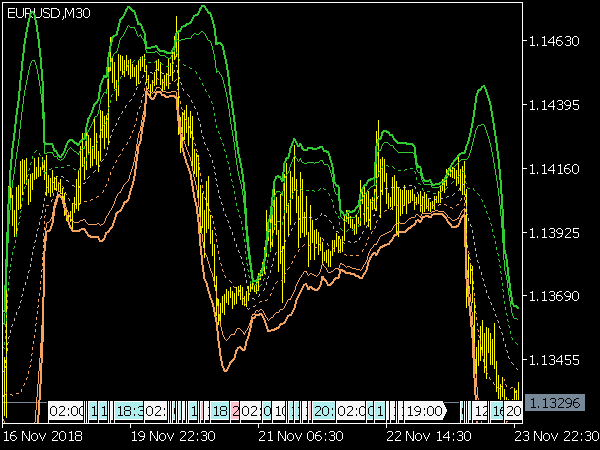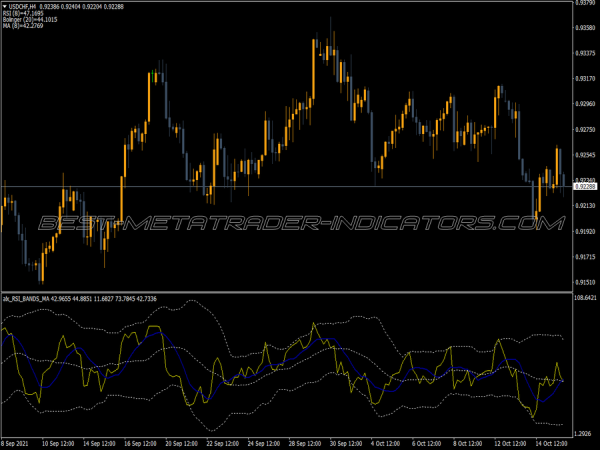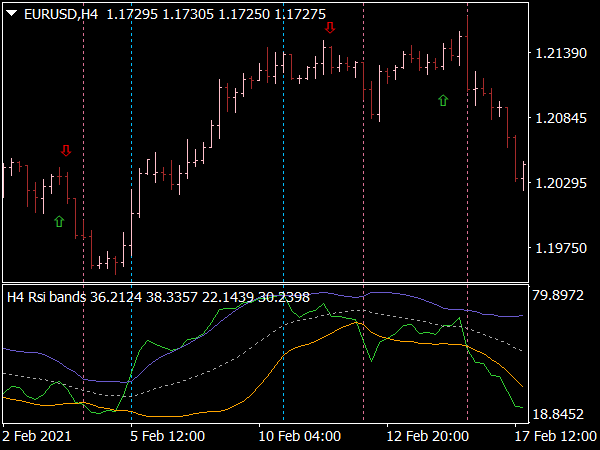
Scalping is not about forecasting the entire session. It is about finding a small, high-probability window where price, momentum, volatility, and execution conditions line up cleanly. A good scalping indicator never replaces discipline, but it can help you make faster, cleaner decisions when seconds matter.
In this guide, we will look at what a scalping indicator actually does, which MetaTrader-compatible indicators are most useful for Forex scalpers, how to combine them into practical strategies, and how to avoid the mistakes that turn fast trading into expensive noise.
📌 What Is a Scalping Indicator?
A scalping indicator is a technical tool used by short-term traders to identify quick entry and exit opportunities on fast-moving Forex charts. Scalpers usually aim for small price movements, often holding trades for seconds or minutes rather than hours or days.
The main purpose of a scalping indicator is to simplify fast decision-making without removing the trader’s judgment. It may help identify:
- Short-term trend direction
- Momentum acceleration or exhaustion
- Overbought and oversold conditions
- Volatility expansion
- Potential support and resistance zones
- Entry timing after pullbacks or breakouts
Trader’s note: The best scalping indicator is rarely the most complicated one. In fast markets, clarity beats decoration. If your chart looks impressive but slows your trigger decision, it is probably hurting your scalping performance.
🎯 Why Scalpers Use Indicators
Forex scalping demands speed, structure, and emotional control. Indicators can reduce hesitation by giving traders a repeatable decision framework. They are most useful when combined with price action, session timing, risk management, and constant spread awareness.
⚙️ Structure
Indicators help define whether the market is trending, ranging, accelerating, or losing momentum.
🚀 Timing
They can support faster entries after pullbacks, breakouts, or momentum shifts.
🛡️ Discipline
A clear indicator-based plan can prevent random trades caused by fear of missing out.
📊 Best Types of Scalping Indicators
There is no single perfect scalping indicator for every trader, pair, timeframe, or session. Still, a few categories remain popular because they answer the core scalping questions: direction, timing, volatility, and exit quality.
| Indicator Type | Purpose | Best Use | Main Risk |
|---|---|---|---|
| Moving Averages | Trend direction and dynamic support/resistance | Pullback entries in active sessions | Lagging signals in choppy markets |
| RSI | Momentum and overbought/oversold conditions | Reversal or continuation confirmation | Can stay extreme during strong trends |
| MACD | Momentum shifts and trend confirmation | Filtering direction and avoiding weak trades | May react too slowly for very short scalps |
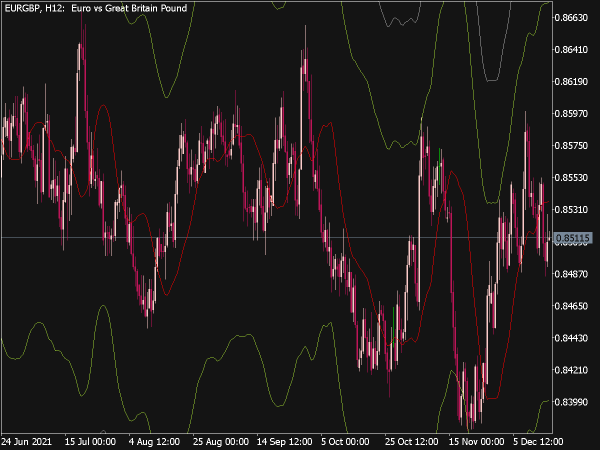
| Bollinger Bands | Volatility and price extremes | Range scalping and breakout awareness | False breakouts during news events |
| ATR | Volatility measurement | Stop-loss and take-profit planning | Does not provide direction |
| VWAP | Intraday fair value reference | Mean reversion and trend bias | Less useful in thin or irregular sessions |
⚡ Popular Scalping Indicator Setups
📈 1. EMA Pullback Scalping Setup
This setup uses fast and medium exponential moving averages to identify short-term trend direction. A common approach is to use the 9 EMA and 21 EMA on a 1-minute or 5-minute chart.
Setup Rules
- Use the 9 EMA and 21 EMA.
- Look for price trading above both EMAs for bullish bias.
- Look for price trading below both EMAs for bearish bias.
- Wait for a pullback toward the EMAs.
- Enter only if price rejects the EMA area with momentum.
Example idea: If EUR/USD is trending upward during the London session, a pullback into the 9 EMA or 21 EMA followed by a strong bullish candle may offer a short-term long opportunity. The stop can be placed below the recent micro swing low, while the target can be based on the next resistance area or a fixed risk-reward ratio.
🔁 2. RSI Reversal Scalping Setup
The Relative Strength Index can help identify short-term exhaustion. For scalpers, RSI is often adjusted from the default 14 period to a faster setting such as 7 or 9.
Setup Rules
- Use RSI 7 or RSI 9 for faster signals.
- Look for RSI below 30 in a support zone for potential long setups.
- Look for RSI above 70 in a resistance zone for potential short setups.
- Do not trade RSI alone; confirm with price action.
- Avoid countertrend RSI trades during strong news-driven moves.
💥 3. Bollinger Band Breakout Scalping Setup
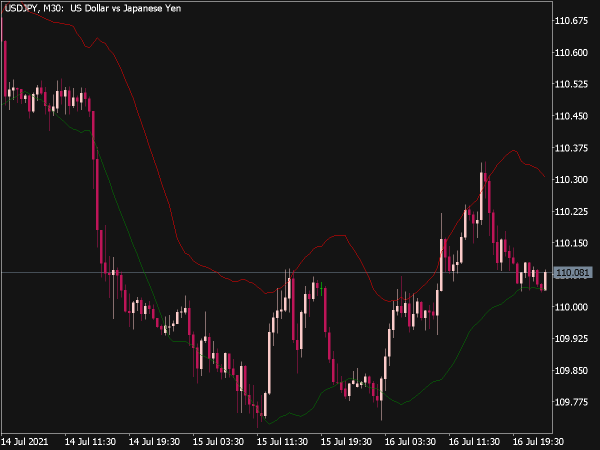
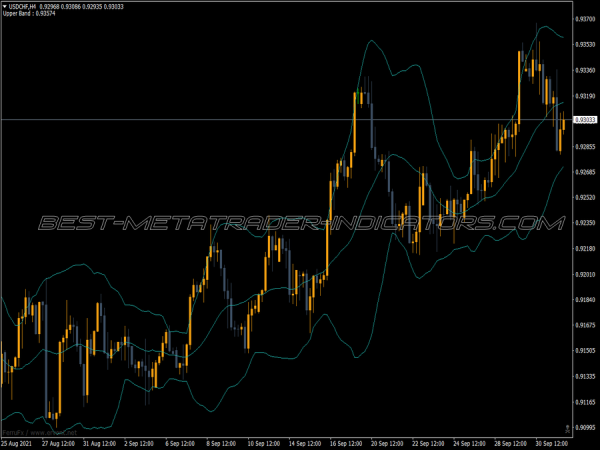
Bollinger Bands can help identify volatility compression and expansion. When bands tighten, the market may be preparing for a sharper move. When price breaks outside the bands with strong momentum, scalpers may look for continuation opportunities.
Setup Rules
- Use Bollinger Bands with a 20-period setting and 2 standard deviations.
- Wait for band compression before a potential breakout.
- Confirm breakout direction with candle strength and volume proxy if available.
- Avoid chasing after a long extended candle.
- Use tight risk control because false breakouts are common.
🧠 Scalping Indicator Strategy: The 3-Layer Confirmation Model
After enough screen time, one lesson becomes obvious: one signal is rarely enough. A more professional approach is to use a 3-layer confirmation model. That does not mean stacking ten indicators on one chart. It means every tool on the chart must answer a different trading question.
3-Layer Scalping Confirmation Model
Use each layer for a specific decision. Avoid indicators that repeat the same information.
| Layer | Question | Example Indicator | Decision |
|---|---|---|---|
| DirectionMarket bias | Should I look for buys or sells? | EMA 50, VWAP, market structure | Trade with the stronger short-term bias |
| TimingEntry trigger | Is this the right moment to enter? | EMA pullback, RSI reset, candle rejection | Enter only after confirmation |
| VolatilityRisk planning | Is there enough movement to justify the trade? | ATR, Bollinger Bands, session range | Adjust stop and target to current conditions |
🕒 Best Timeframes for Scalping Indicators
Most Forex scalpers use the 1-minute, 3-minute, or 5-minute chart for execution. However, it is often useful to check a slightly higher timeframe before entering. This helps avoid buying directly into higher-timeframe selling pressure or shorting into obvious demand.
⏱️ 1-Minute Chart
Best for very active scalpers who can make quick decisions. It offers many signals, but also more noise and false entries.
⏱️ 5-Minute Chart
Often cleaner and more forgiving. It may provide fewer trades, but signals are usually easier to manage.
Practical tip: Use the 15-minute chart to define the intraday bias, then use the 1-minute or 5-minute chart for entry timing. This keeps your entries aligned with the broader intraday flow while still allowing precise execution.
💱 Best Currency Pairs for Scalping Indicators
Scalpers usually prefer liquid pairs with tight spreads and reliable execution. A good scalping indicator cannot rescue poor trading conditions. Wide spreads, thin liquidity, and slippage can destroy even a technically correct setup.
| Pair | Why Scalpers Like It | Typical Approach |
|---|---|---|
| EUR/USD | High liquidity and usually tight spreads | EMA pullbacks, VWAP reactions, breakout scalps |
| GBP/USD | Strong intraday movement | Momentum scalping with strict risk control |
| USD/JPY | Often clean technical reactions | Support/resistance scalps and trend continuation |
| EUR/JPY | Good movement during London and New York overlap | Breakout and pullback scalping |
✅ Scalping Indicator Checklist Before Entering a Trade
Before taking any scalp, run through a short checklist. It may sound basic, but in fast trading, that basic discipline often separates controlled execution from impulsive clicking.
Pre-Trade Checklist
- Is the spread acceptable for the target size?
- Is the pair liquid right now?
- Is there a clear short-term direction?
- Is price near a meaningful level?
- Does the indicator confirm the setup?
- Is the stop-loss location logical?
- Is the potential reward worth the risk?
- Are spreads, candle ranges, or fills showing abnormal conditions?
- Am I trading the plan or chasing movement?
🚫 Common Scalping Indicator Mistakes
Many traders fail with scalping indicators because they expect them to behave like automatic money machines. Indicators are decision-support tools, not promises. The real edge comes from matching the right signal with the right market condition and then controlling the downside.
❌ Too Many Indicators
Five indicators giving similar signals do not create more confirmation. They often create confusion and late entries.
❌ Ignoring the Spread
If your target is only a few pips, the spread becomes a major cost. Scalpers must always think in net profit, not gross movement.
❌ Trading Every Signal
A signal is not a setup. A setup needs context, level, timing, and risk control.
❌ No Exit Plan
Scalping without a predefined exit often leads to emotional holding, revenge trading, and turning small losses into large losses.
🛠️ Building a Simple Scalping Indicator Template
A clean template is often more powerful than a complicated one. Here is a practical example of a simple MetaTrader-friendly scalping chart layout:
Suggested Template
- EMA 50: Defines short-term directional bias.
- EMA 9 and EMA 21: Helps identify pullbacks and momentum continuation.
- RSI 7: Shows short-term momentum reset or exhaustion.
- ATR 14: Helps set realistic stop-loss and take-profit levels.
- Horizontal levels: Mark previous highs, lows, session open, and key intraday zones.
Risk warning: Scalping is execution-sensitive. A strategy that looks profitable on a chart can perform poorly in live conditions if spreads, commissions, slippage, and emotional pressure are ignored.
📐 Example Scalping Plan
Below is a simple plan that combines indicators with price action and defined risk. It is not financial advice, but it shows how a trader can structure a repeatable technical routine instead of reacting candle by candle.
| Step | Rule | Purpose |
|---|---|---|
| 1 | Check spread, volatility, and execution conditions before trading | Avoid entering during unstable execution conditions |
| 2 | Mark high and low of the Asian session | Define liquidity zones |
| 3 | Use 15-minute chart for bias | Avoid trading against obvious pressure |
| 4 | Wait for EMA pullback on 1-minute or 5-minute chart | Improve entry location |
| 5 | Confirm with RSI reset or candle rejection | Avoid entering too early |
| 6 | Set stop behind recent micro structure | Protect capital |
| 7 | Exit at predefined target or when momentum fades | Lock in short-term opportunity |
💡 Pro Tips for Using Scalping Indicators
🧭 Trade Sessions, Not Random Hours
Scalping usually works best when liquidity and volatility are present. London, New York, and their overlap are often more suitable than quiet market hours.
📉 Respect Losing Streaks
Set a daily loss limit. Once reached, stop trading. Scalping can become dangerous when traders try to recover losses quickly.
🧾 Keep a Scalping Journal
Record pair, session, setup, indicator signal, spread, entry, exit, and emotional state. Small details often reveal big performance leaks.
🔍 Scalping Indicator vs Price Action
Some traders prefer pure price action, while others rely heavily on indicators. In practice, the strongest approach often combines both. Indicators help organize information, while price action confirms whether real buying or selling pressure is actually present at the level.
Indicator-Based Scalping vs Price Action Scalping
Both approaches can work, but they require different skills and execution styles.
| Approach | Strength | Weakness | Best For |
|---|---|---|---|
| Indicator-Based ScalpingStructured and visual | Clear rules and easier consistency | Signals may lag or fail in chop | Traders who need a repeatable framework |
| Price Action ScalpingMarket structure focused | More responsive to live market behavior | Requires more screen time and experience | Experienced traders who read candles and liquidity well |
| Hybrid ScalpingIndicators plus structure | Balanced confirmation and context | Requires discipline to avoid over-filtering | Most serious short-term traders |
📋 Daily Scalping Routine
- Prepare: Check spreads, session timing, volatility, and major technical levels.
- Define bias: Use higher timeframe structure and your main trend indicator.
- Wait: Let price come to your zone instead of chasing candles.
- Confirm: Use your scalping indicator only when price is already in a valid area.
- Execute: Enter with a predefined stop-loss and target.
- Manage: Reduce risk quickly if the trade does not react as expected.
- Review: Screenshot the trade and write one lesson after each session.
🧩 FAQ: Scalping Indicator Questions
❓ What is the best scalping indicator?
There is no universal best indicator. Many scalpers use EMAs, RSI, Bollinger Bands, ATR, VWAP, or a combination of these. The best choice depends on your pair, timeframe, session, and trading style.
❓ Can scalping indicators work on a 1-minute chart?
Yes, but the 1-minute chart produces more noise. Traders need strict filters, fast execution, and strong emotional discipline.
❓ Is RSI good for scalping?
RSI can be useful for identifying short-term exhaustion or momentum resets, but it should not be used alone. It works better when combined with support, resistance, trend direction, and price action.
❓ How many indicators should I use for scalping?
Usually two to four well-chosen tools are enough. One for direction, one for timing, one for volatility, and one for key levels can create a clean structure.
❓ Is scalping suitable for beginners?
Scalping is challenging because it requires fast decisions, clean execution, and strong risk control. Beginners should practice on demo accounts and start with slower timeframes before risking real capital.
❓ Do scalping indicators repaint?
Some custom indicators may repaint, meaning signals can change after the candle closes. Always test an indicator carefully in MetaTrader and understand whether its signals are fixed, delayed, or dynamic.
🏁 Final Thoughts
A scalping indicator can be a powerful tool, but only when it sits inside a complete trading process. The goal is not to take every signal that flashes on the screen. The goal is to identify moments where direction, timing, volatility, and risk are aligned.
Professional scalping is selective. It is built on patience, fast execution, small losses, realistic take-profit zones, and consistent review. Keep your chart clean, your rules simple, and your risk under control. The indicator should support your decision, not make the trade for you.
Disclaimer: This article is for educational purposes only and does not constitute financial advice. Forex trading involves significant risk and may not be suitable for all investors. Always trade with a predefined stop loss, realistic take profit, and only with capital you can afford to lose.