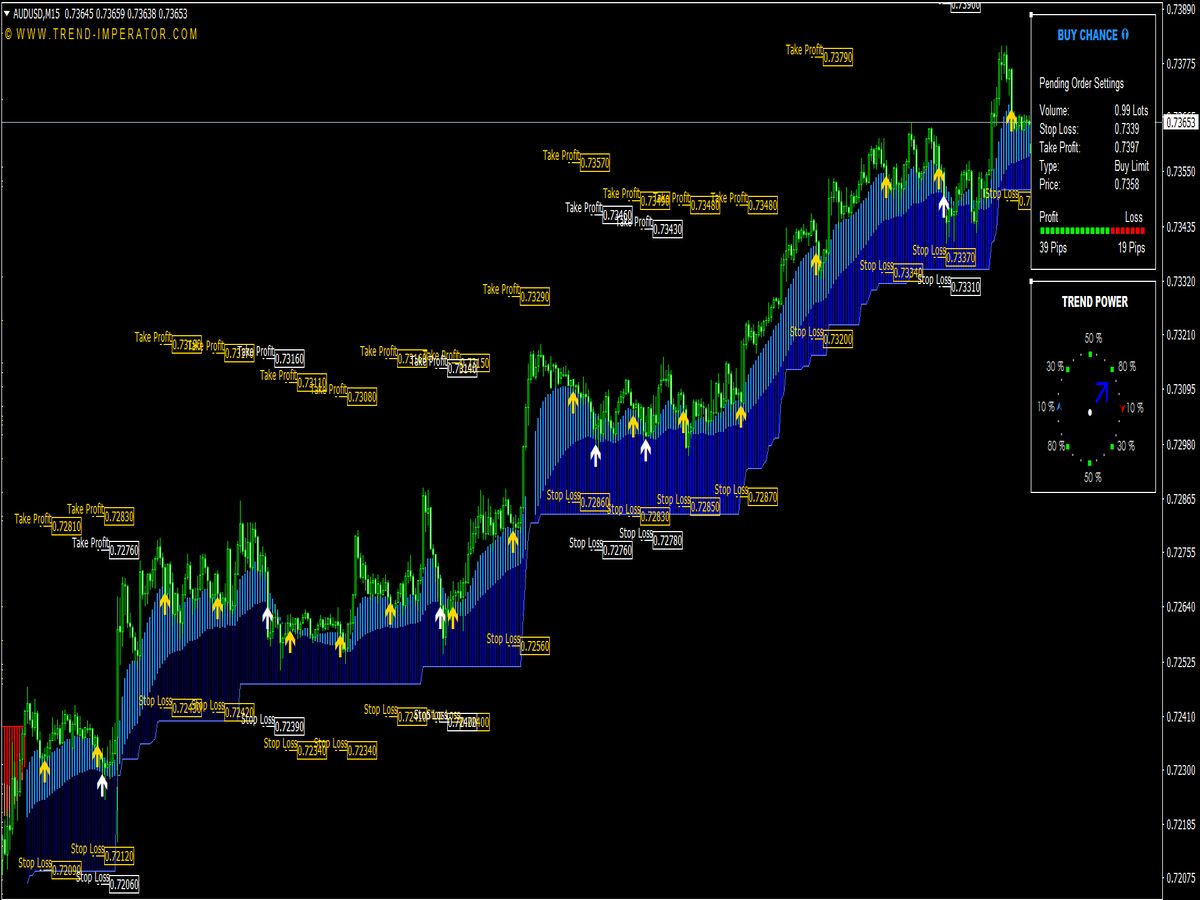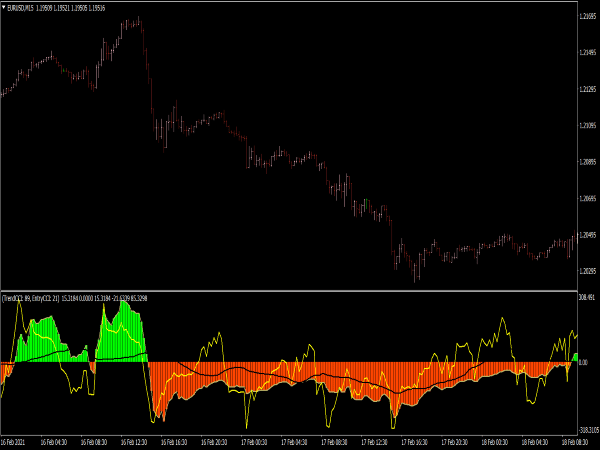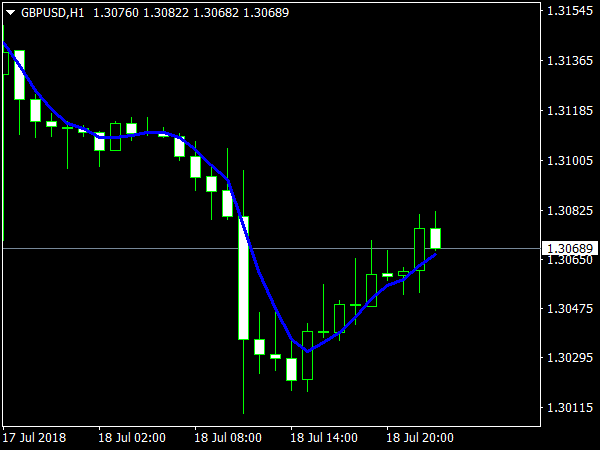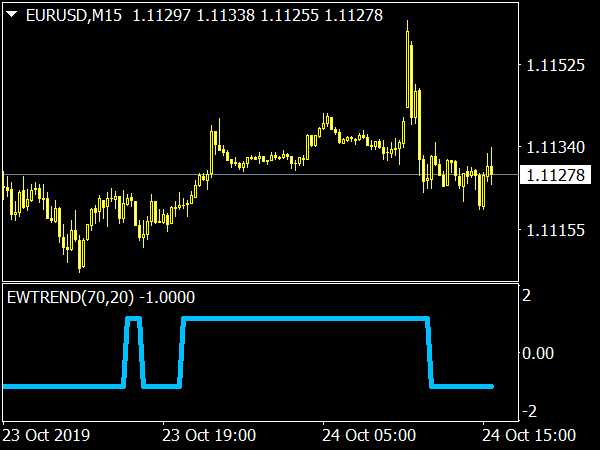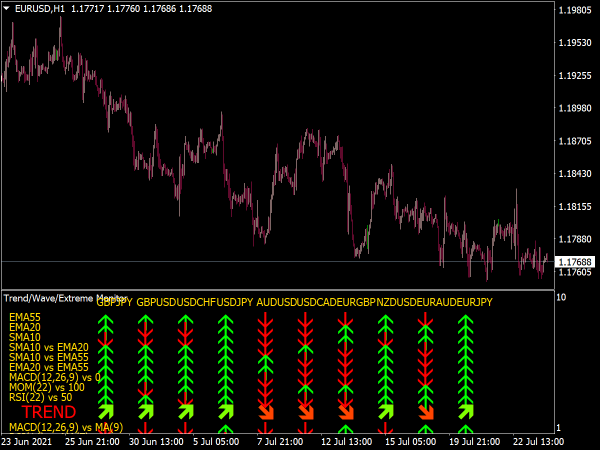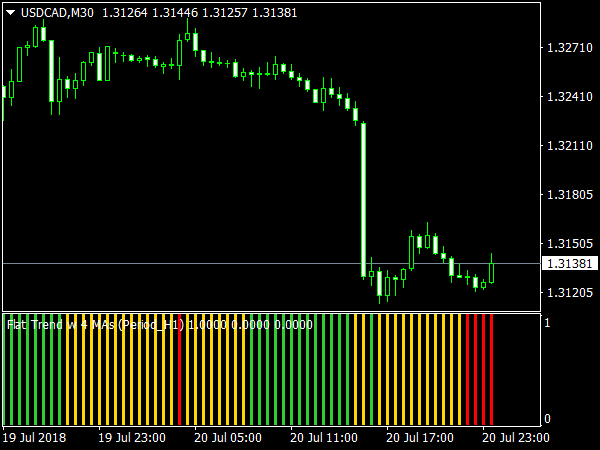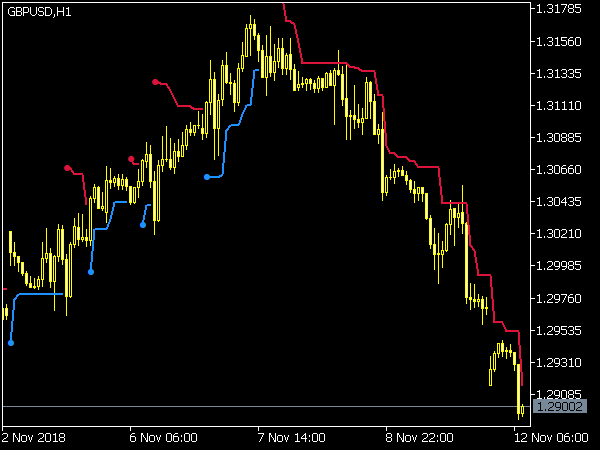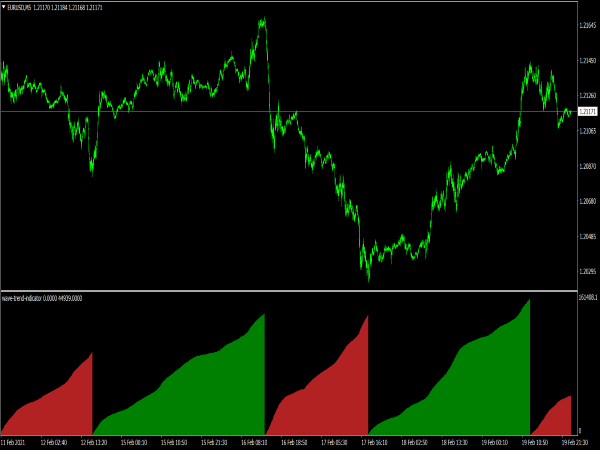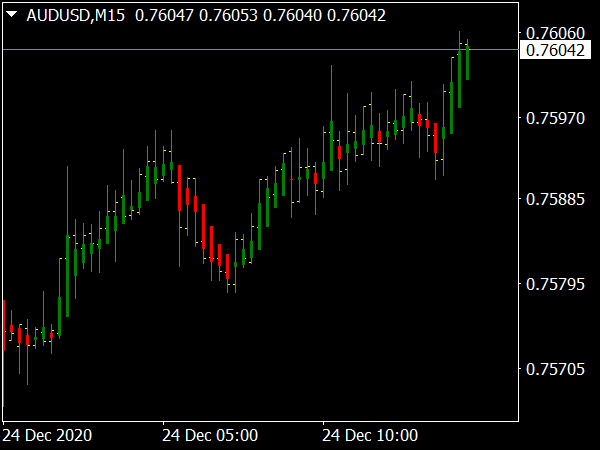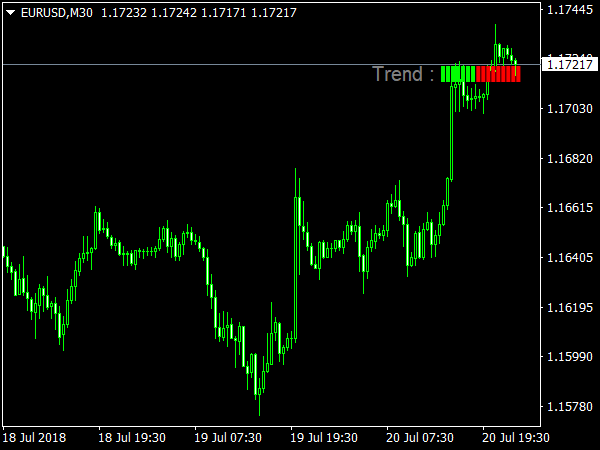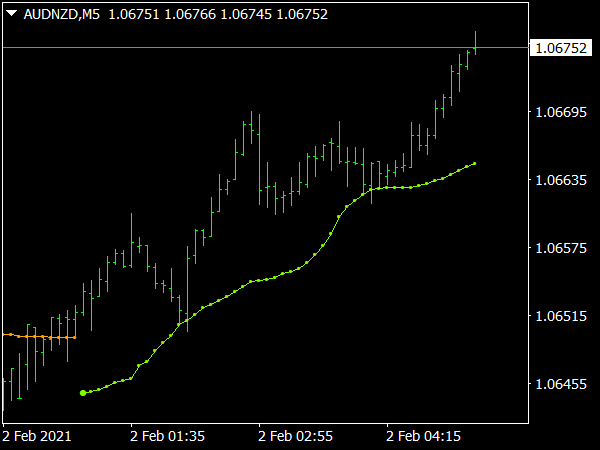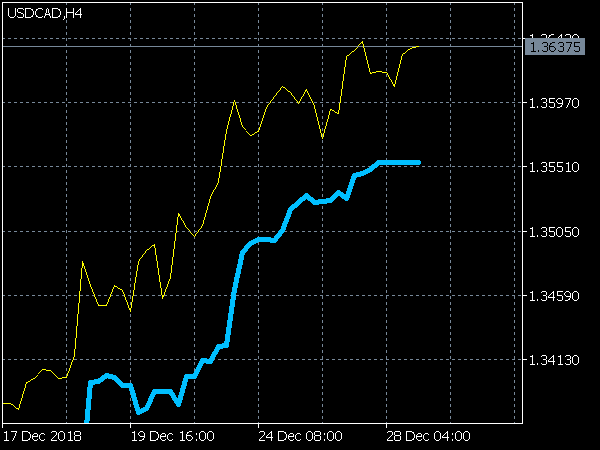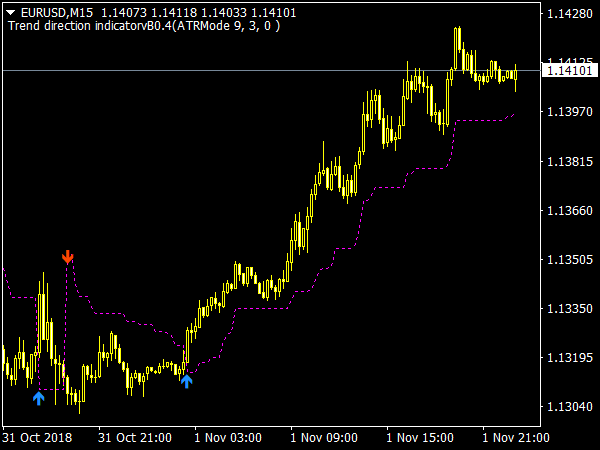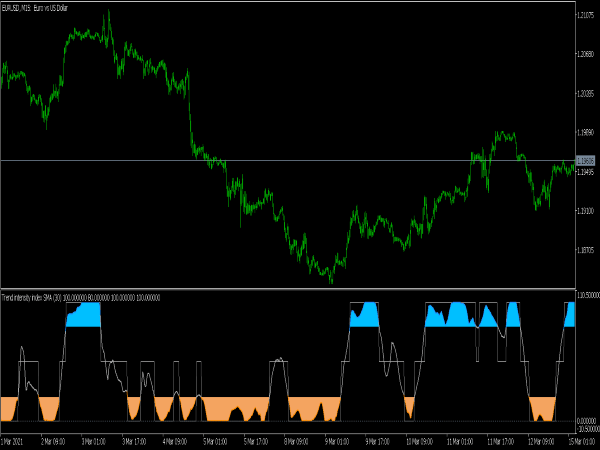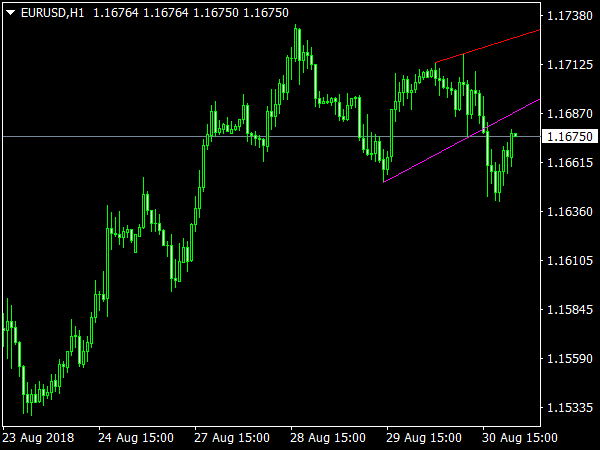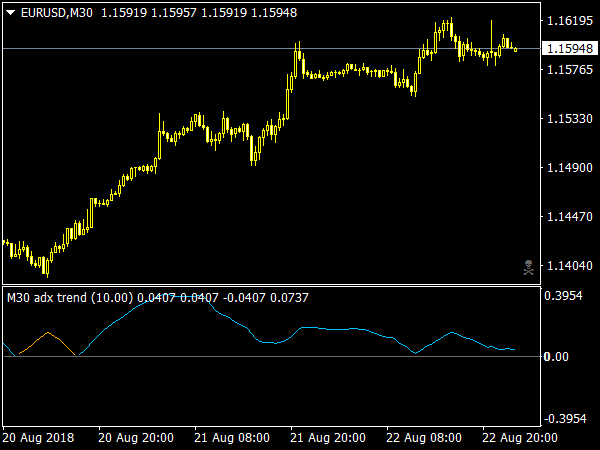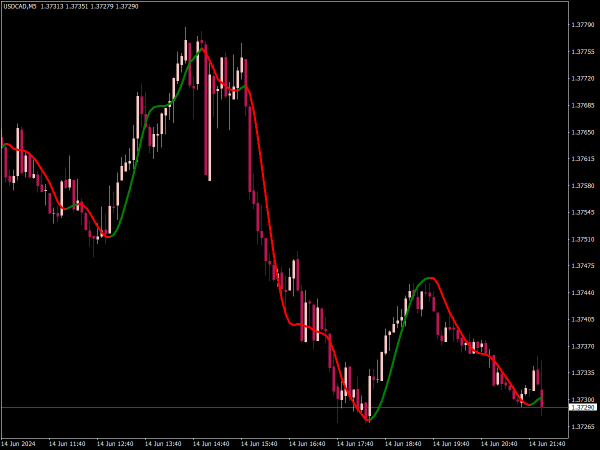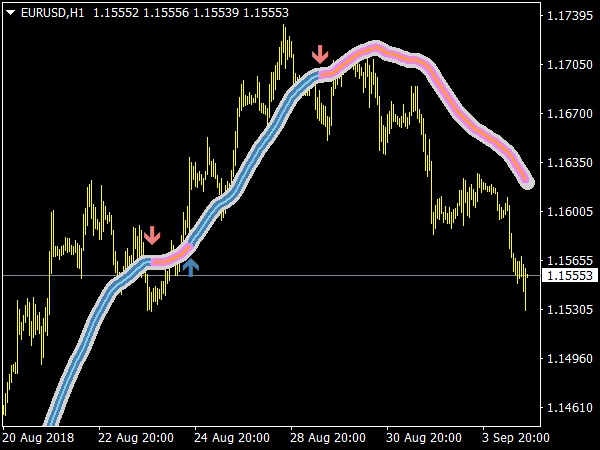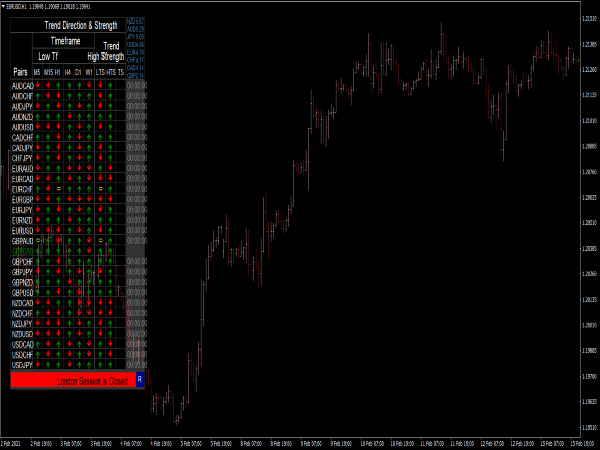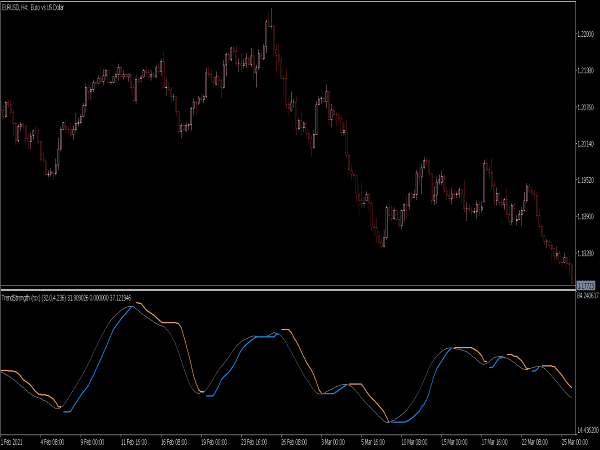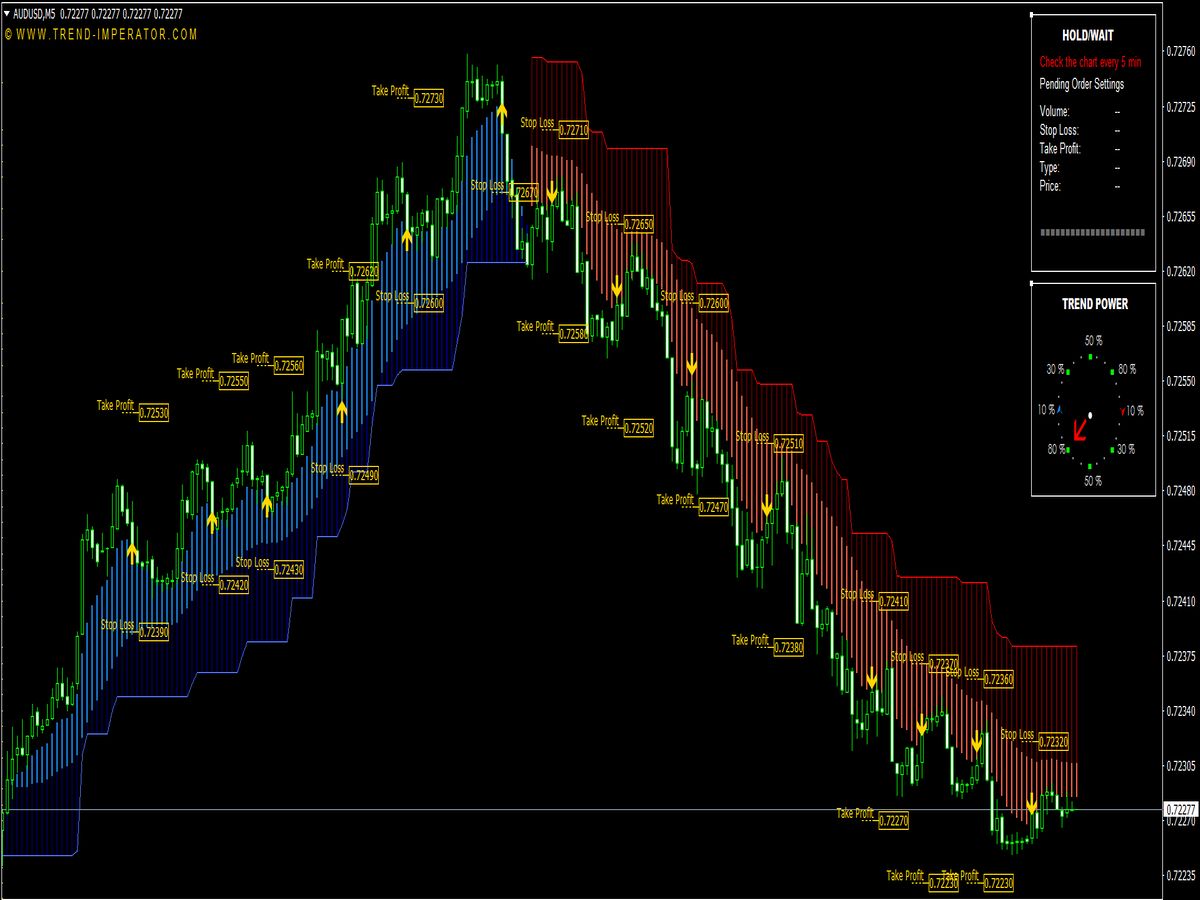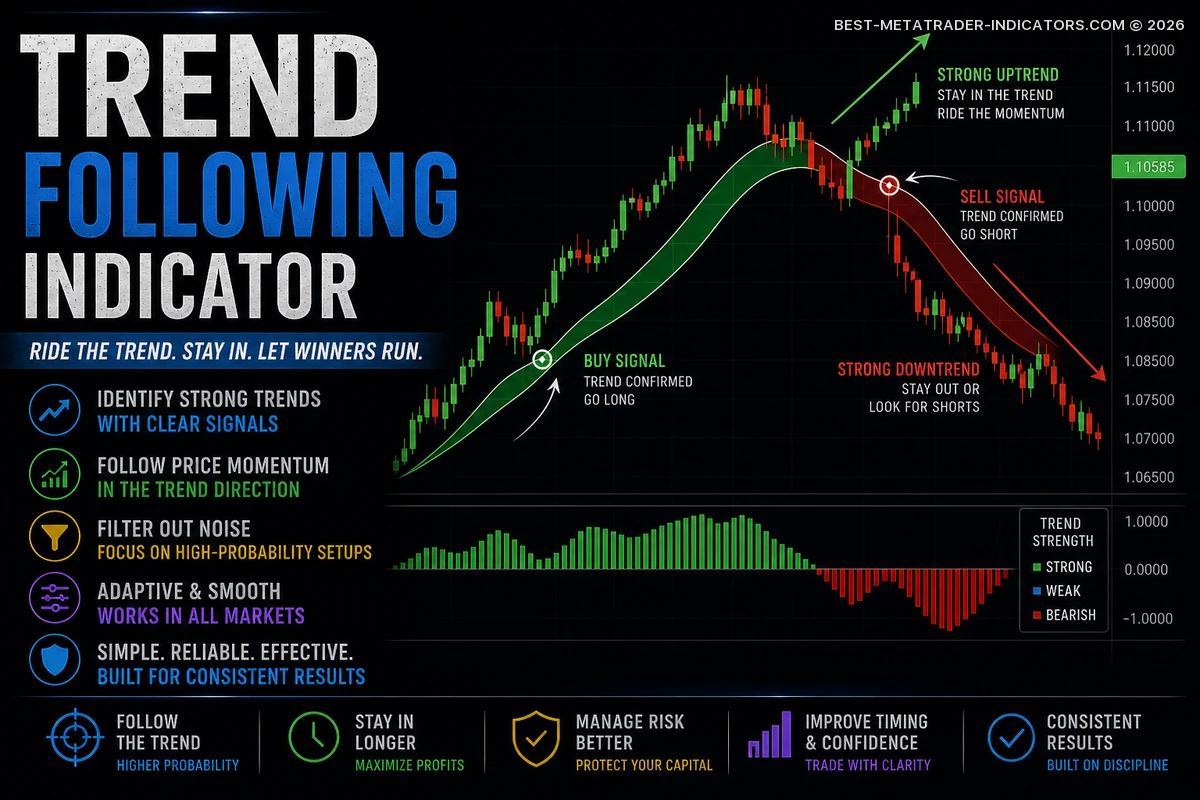
A trend following indicator is not designed to predict the exact top or bottom of the market. Its real job is far more practical: it helps you stay aligned with the dominant direction, filter out random market noise, and build a repeatable trading process around momentum instead of emotion.
Many traders do not struggle because they cannot find trades. They struggle because they enter too early, exit without a plan, or keep fighting strong trends with emotional counter-trend ideas. A well-used trend following indicator can reduce that confusion by answering one simple question: is the market more likely trending up, trending down, or moving sideways?
📈 What Is a Trend Following Indicator?
A trend following indicator is a technical tool that helps traders identify the current direction of price movement. Instead of trying to forecast reversals, it follows existing price action and highlights whether buyers or sellers are currently controlling the chart.
In Forex trading, trend following indicators are often used to trade currency pairs that show clear momentum and clean market structure. They can also be useful for gold, indices, crypto, commodities, and stocks, but the logic stays the same: trade with the stronger side of the market, not against it.
Professional note: Trend following works best when the market actually trends. It becomes weaker during tight ranges, low-volatility pauses, or choppy consolidation zones. This is why context matters more than the indicator alone.
🧭 Why Trend Following Matters in Forex Trading
Forex markets often move in waves. A currency pair may trend for several candles, several sessions, or even longer when price keeps respecting the same directional structure. Trend following indicators help traders participate in those moves without needing to guess every turning point.
Direction
They help you understand whether price is generally moving higher, lower, or sideways.
Discipline
They reduce emotional entries by giving you a structured reason to enter, wait, or stay out.
Timing
They help filter pullbacks, breakouts, and continuation setups inside an existing trend.
⚙️ How a Trend Following Indicator Works
Most trend following indicators use price data to smooth out market noise. Some are based on moving averages, some measure momentum, and others combine volatility with directional signals. The goal is not to react to every small candle, but to create a clearer view of the broader market direction.
For example, when price stays above a rising moving average, many traders interpret that as an uptrend. When price stays below a falling moving average, they may see it as a downtrend. More advanced MetaTrader-compatible indicators may add trend strength, alerts, colored signals, scanners, or multi-timeframe confirmation.
| Market Condition | Indicator Behavior | Typical Trader Action |
|---|---|---|
| Uptrend | Price trades above a trend line, moving average, or bullish signal zone. | Look for buy setups after pullbacks or breakout confirmations. |
| Downtrend | Price trades below a trend line, moving average, or bearish signal zone. | Look for sell setups after retracements or breakdown confirmations. |
| Sideways Market | The indicator becomes flat, mixed, or frequently changes direction. | Reduce position size, avoid weak signals, or wait for a clean breakout. |
🔥 Popular Types of Trend Following Indicators
There is no single perfect trend following indicator. Each tool has strengths and weaknesses. The best choice depends on your trading style, timeframe, risk tolerance, and whether you prefer early signals or stronger confirmation.
Below is a practical comparison of popular trend following tools used by Forex traders.
| Indicator | Best For | Strength | Weakness |
|---|---|---|---|
| Moving AverageSMA, EMA, WMA | Basic trend direction and pullback trading. | Simple, clean, and easy to understand. | Can lag after sharp reversals. |
| MACDMomentum plus trend | Momentum shifts and trend continuation. | Shows both direction and momentum changes. | Can produce false signals in ranges. |
| SupertrendVolatility-based trend tool | Clear visual buy and sell trend zones. | Easy to read and useful for trailing stops. | May flip too often in choppy markets. |
| ADXTrend strength indicator | Measuring whether a trend has strength. | Helps filter weak market conditions. | Does not show direction by itself. |
| Ichimoku CloudFull trend structure | Multi-layer trend analysis. | Shows trend, support, resistance, and momentum. | Can look complicated for beginners. |
🎯 Simple Trend Following Strategy for Forex
Here is a beginner-friendly but professional approach that can be adapted to many currency pairs. The idea is to use a trend indicator for direction, a pullback for entry, and risk management for protection.
Strategy: Trend Pullback Continuation
- Choose a liquid Forex pair such as EUR/USD, GBP/USD, USD/JPY, or XAU/USD if you also trade gold.
- Open the higher timeframe first, for example H1 or H4, and identify the main trend direction.
- Use a trend following indicator such as EMA, Supertrend, or a professional trend scanner.
- Wait for price to pull back toward the trend zone instead of chasing an extended move.
- Look for confirmation: a bullish candle in an uptrend or a bearish candle in a downtrend.
- Place the stop loss beyond the recent swing high or swing low.
- Take partial profit at the next structure level and trail the rest if the trend continues.
🧪 Example: Using a Trend Following Indicator Step by Step
Imagine EUR/USD is trading above a rising 50-period EMA on the H1 chart. The trend is clearly bullish, but price has already moved far away from the average. Instead of buying late, a disciplined trader waits for a pullback.
When price returns near the EMA and forms a strong bullish rejection candle, the trader now has three useful pieces of confirmation: the trend is up, price has pulled back, and buyers have reacted from a logical area. This is usually a cleaner setup than entering randomly in the middle of a candle spike.
Risk warning: No trend following indicator guarantees profit. Every signal can fail. Always use a stop loss, control position size, and avoid risking money you cannot afford to lose.
🧠 Best Timeframes for Trend Following Indicators
Trend following can work on different timeframes, but each timeframe has its own personality. Shorter charts create more signals, but also more noise. Higher charts create fewer signals, but often cleaner market structure.
| Timeframe | Trading Style | Pros | Cons |
|---|---|---|---|
| M5 – M15 | Scalping | More entries and faster feedback. | More false signals and spread sensitivity. |
| M30 – H1 | Intraday trading | Balanced signals with manageable trade duration. | Requires patience and clean session timing. |
| H4 – Daily | Swing trading | Cleaner trends and less screen time. | Wider stops and fewer setups. |
✅ Trend Following Checklist Before You Enter a Trade
- Is the higher timeframe trend clear?
- Is price above or below the main trend indicator?
- Is the indicator sloping in the same direction as the trade idea?
- Is the market trending or only moving sideways?
- Did price pull back to a logical area?
- Is there candle confirmation or breakout confirmation?
- Is the stop loss placed at a technical level?
- Is the reward potential larger than the risk?
- Are you trading during a liquid session?
- Does the setup still make sense if price pulls back one more time?
🚀 Advanced Ideas for Better Trend Following
Experienced traders rarely use a trend indicator in isolation. They combine it with market structure, support and resistance, volatility, session timing, and risk management. This gives each signal more context.
Use Multi-Timeframe Confirmation
If the H4 trend is bullish, look for buy setups on H1 or M30. This keeps your entries aligned with the larger market flow.
Avoid Flat Indicator Signals
When a trend indicator becomes flat, price is often consolidating. This is where many false breakouts and fake signals appear.
Combine Trend and Volatility
A trend with expanding volatility often has more follow-through than a trend with weak candles and low range.
Trail Winners Carefully
Trend following is powerful because one strong winner can pay for several small losses. Do not cut every winning trade too early.
⚠️ Common Mistakes When Using Trend Following Indicators
Most problems come from unrealistic expectations. A trend following indicator is a decision-support tool, not a magic signal machine. The trader still needs judgment, discipline, and risk control.
Common mistakes to avoid:
- Entering too late: Buying after a huge bullish move or selling after a huge bearish move often creates poor risk-to-reward.
- Ignoring market structure: A buy signal directly below strong resistance may have limited potential.
- Trading every signal: Not all signals are equal. Some appear in weak, messy, low-quality conditions.
- Using too many indicators: Too many tools can create confusion and analysis paralysis.
- No stop loss: Even the cleanest trend setup can fail quickly after a sharp liquidity spike or failed breakout.
📊 Trend Following Indicator vs Reversal Indicator
Trend following and reversal trading are very different approaches. Both can work, but they require different expectations. Trend following accepts that you may enter after the move has already started. Reversal trading tries to catch turning points, which can be profitable but often requires more precision and experience.
| Feature | Trend Following Indicator | Reversal Indicator |
|---|---|---|
| Main Goal | Trade in the direction of existing momentum. | Find potential turning points. |
| Entry Style | Continuation, pullback, breakout. | Overbought, oversold, divergence, exhaustion. |
| Best Market | Strong directional markets. | Range-bound or exhausted markets. |
| Main Risk | Late entries and whipsaws. | Fighting a strong trend too early. |
💡 Pro Tips for Using Trend Indicators Better
- Let the trend prove itself first. Do not force trades before structure becomes clear.
- Use alerts instead of staring at charts all day. Alerts can help you wait for better conditions.
- Respect support and resistance. A trend signal is stronger when it appears near a logical technical level.
- Backtest your settings. The same indicator can behave very differently on EUR/USD, GBP/JPY, gold, or crypto.
- Track your trades. A simple trading journal will show which pairs, sessions, and timeframes work best for your trend strategy.
🛠️ What Makes a Good Professional Trend Following Indicator?
A professional trend following indicator should do more than paint arrows on a chart. It should help you understand the quality of the trend, filter weak market phases, and support consistent trade planning.
Clear Trend Signals
The indicator should make direction easy to read without covering the chart with unnecessary visual noise.
Multi-Timeframe Logic
Professional traders often need confirmation from higher timeframes before entering on lower ones.
Smart Alerts
Push notifications, email alerts, and platform alerts can help traders react without staring at screens all day.
Scanner Functionality
A scanner can quickly identify which Forex pairs or markets are currently trending instead of manually checking every chart.
❓ Frequently Asked Questions About Trend Following Indicators
What is the best trend following indicator?
There is no universal best choice. Moving averages, Supertrend, MACD, ADX, and Ichimoku can all be useful. The best indicator is the one that fits your strategy and risk management.
Do trend following indicators repaint?
Some indicators may repaint depending on how they are coded. Always test an indicator in live market conditions or with historical replay before trusting its signals.
Can beginners use trend following indicators?
Yes. Trend following is often easier to understand than reversal trading because it focuses on trading with the current direction instead of guessing tops and bottoms.
Which timeframe is best for trend following?
H1, H4, and Daily charts are often cleaner for trend following. Scalpers can use M5 or M15, but they must handle more noise and faster decision-making.
Should I use only one indicator?
You can, but many traders combine one trend indicator with support and resistance, price action, volatility, and risk management for better context.
Why do trend indicators fail in sideways markets?
Because there is no strong directional movement to follow. In ranges, price crosses back and forth around the indicator, creating false signals.
🏁 Final Thoughts: Follow the Trend, But Manage the Risk
A trend following indicator can be a powerful tool for Forex traders who want a cleaner, more structured way to trade market direction. It helps filter noise, identify momentum, and avoid emotional counter-trend decisions.
However, the indicator is only one part of the trading process. The real edge comes from combining trend direction with smart entries, strong risk management, patience, and consistent execution. Follow the trend, respect the chart, and never forget that protecting your capital is more important than catching every move.
Disclaimer: Trading Forex, CFDs, crypto, gold, indices, and other leveraged markets involves risk. This article is for educational purposes only and does not provide financial advice, investment advice, or a guarantee of trading results. Always test any strategy first, use proper risk management, and trade only with capital you can afford to lose.