Best Beginner Forex Indicators for Smarter Market Entries

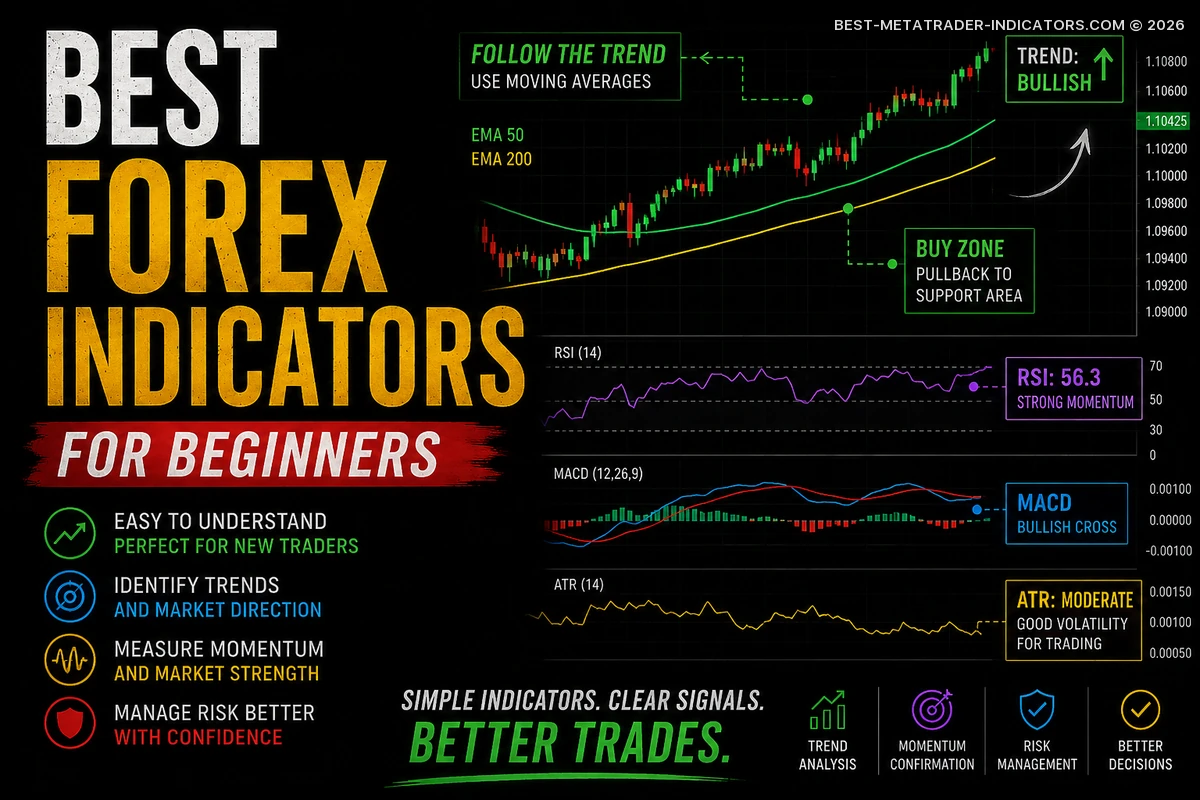
Forex trading indicators for beginners showing trend-following, momentum, trend strength, and volatility tools beside a bullish candlestick chart
Most forex traders overload their charts — these simple indicators may reveal what really matters.

If you are new to forex trading, indicators can feel confusing at first. There are hundreds of tools, colorful lines, signals, arrows, oscillators, dashboards, and scanners. After many years of watching live charts, one lesson becomes very clear: beginners do not need more indicators. They need the right indicators, used with simple rules and a calm decision process.

This guide explains the best forex indicators for beginners, how they work, when to use them, what mistakes to avoid, and how to combine them into practical trading ideas. The goal is not to predict every market move. The goal is to build a clear structure so you can make better trading decisions with less emotional pressure.

Mastering RSI in Forex Trading: Signals, Divergence and Market Timing

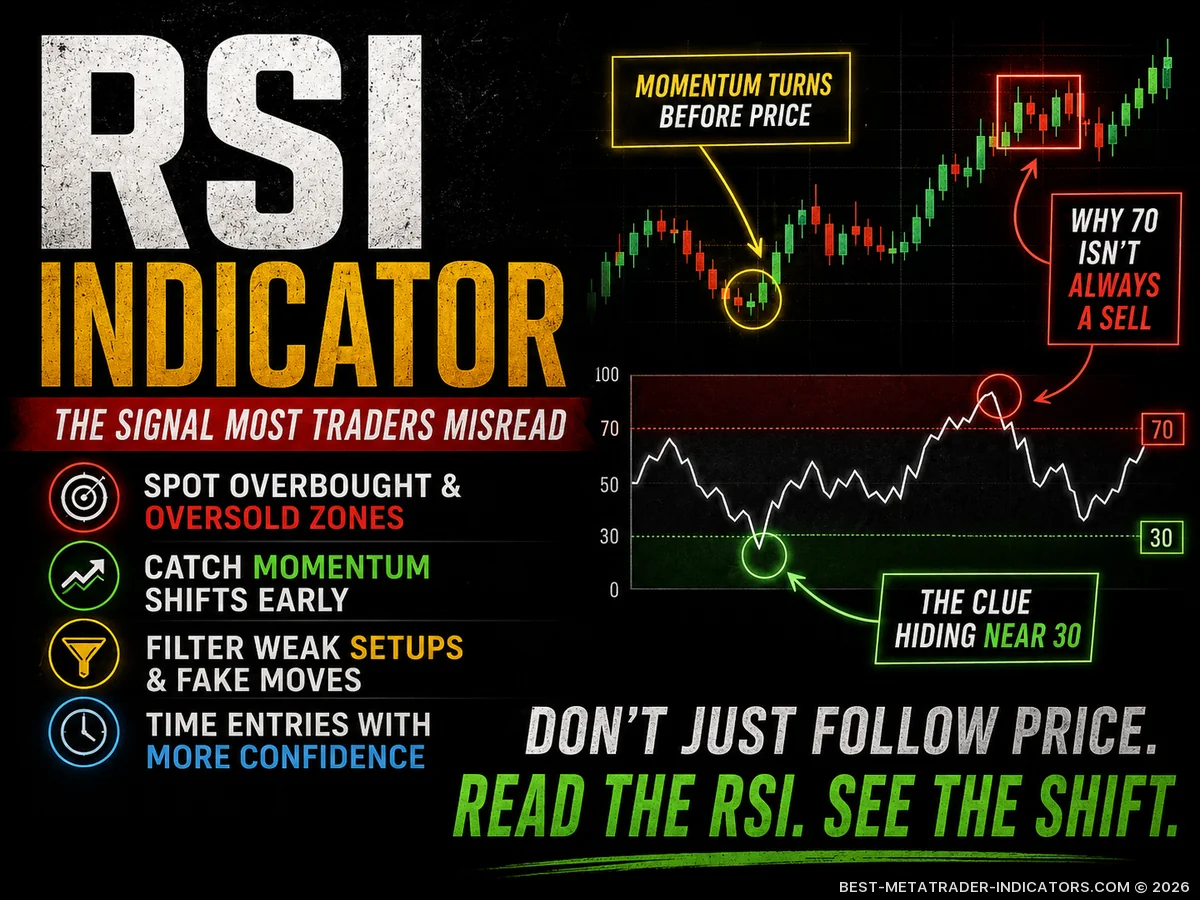
RSI Indicator analysis showing why the 70 and 30 levels may hide more than simple buy and sell signals
RSI Indicator: why 70 and 30 may not mean what traders expect.

The Relative Strength Index, better known as RSI, is one of the most widely used momentum indicators in trading. But popularity does not make an indicator profitable by itself. Many beginners treat RSI as a simple “buy below 30, sell above 70” tool, then find themselves trapped when price keeps moving against the signal.

After years of watching markets trend, range, fake out, reverse, and punish rushed entries, one point becomes clear: RSI is not a magic signal generator. It is a context tool. Used properly, it can help you judge momentum, timing, trend strength, pullback quality, and market exhaustion. Used blindly, it becomes just another reason to enter too early.