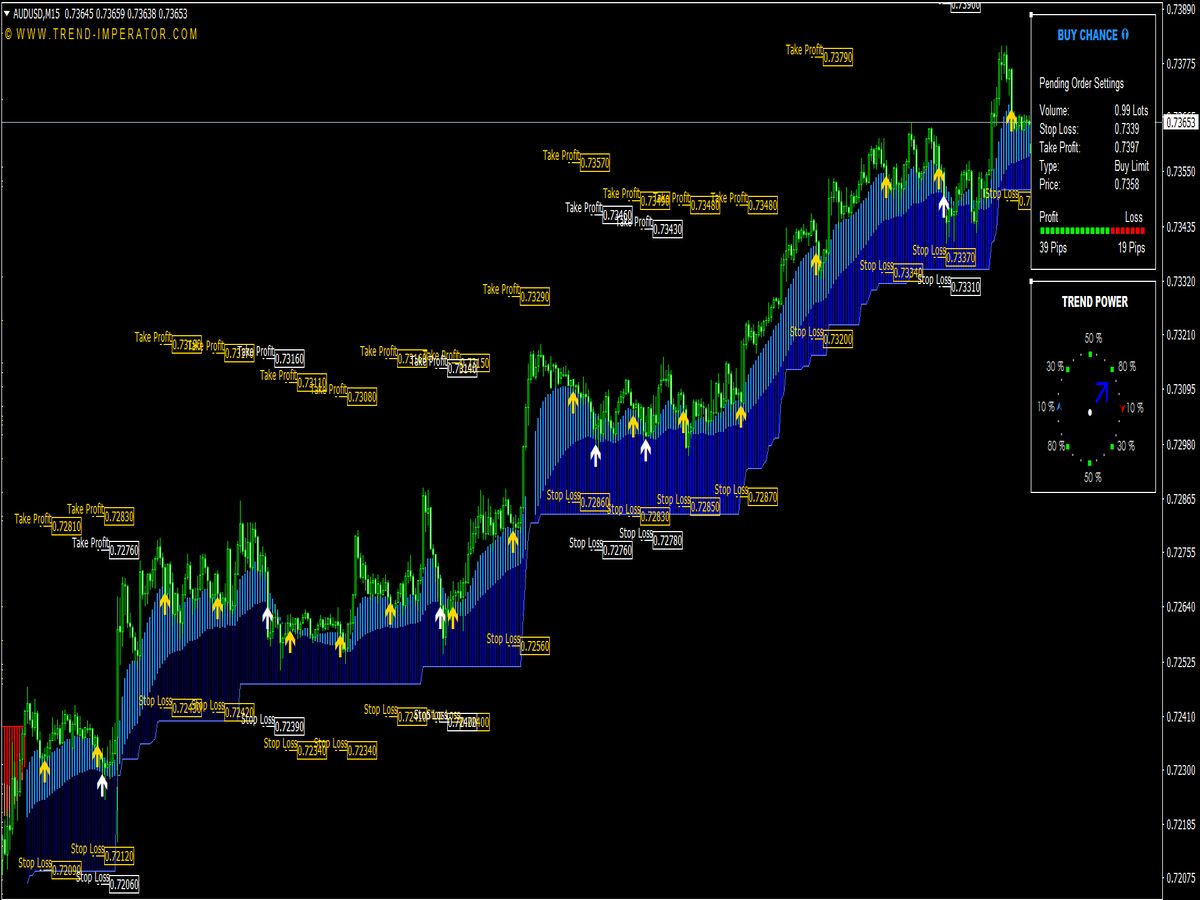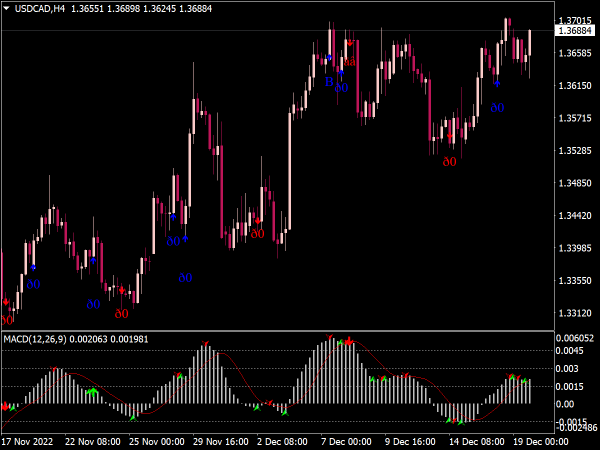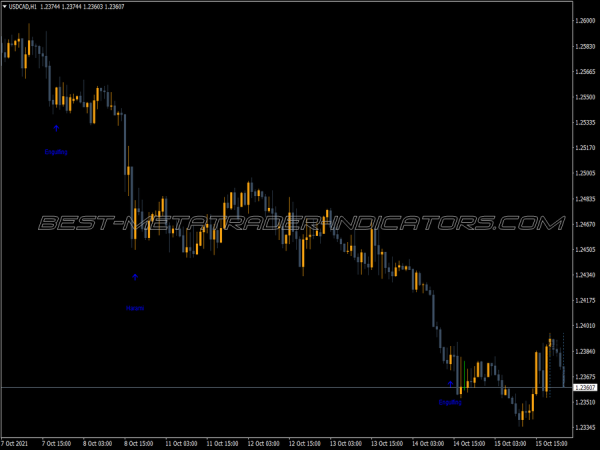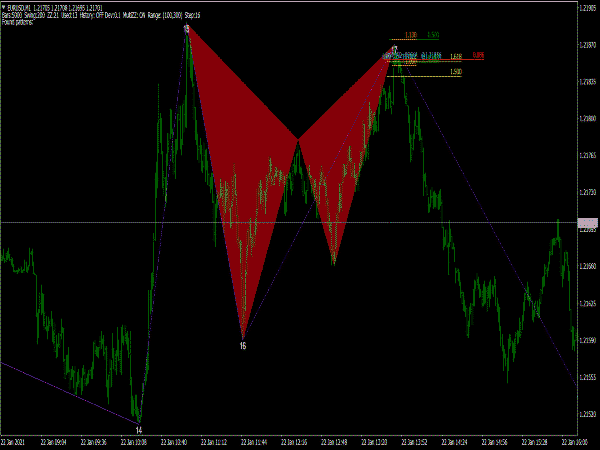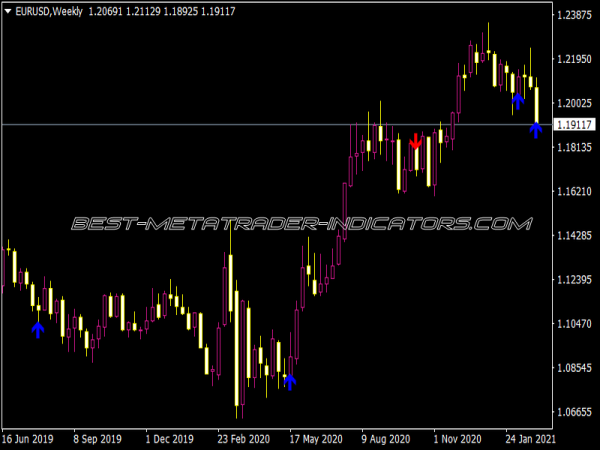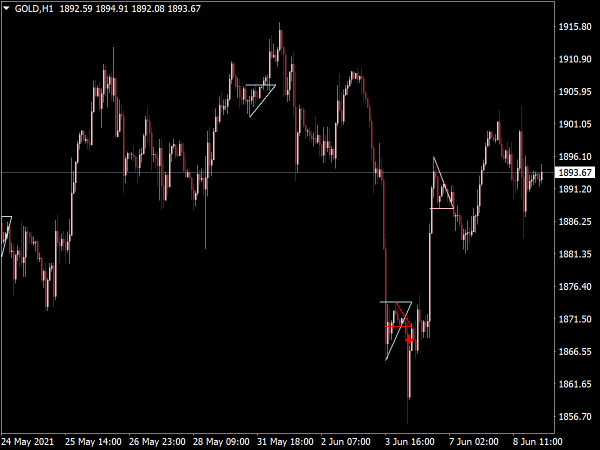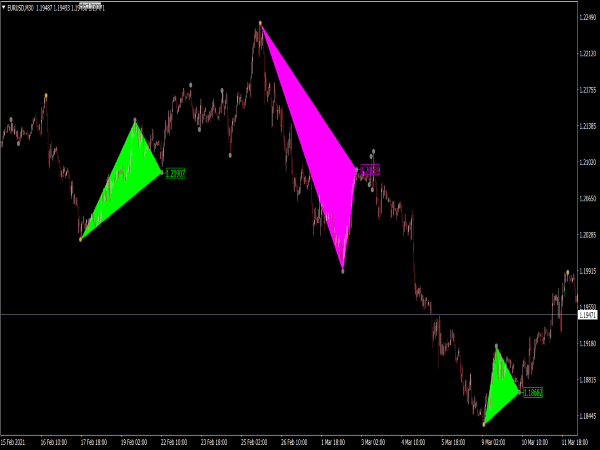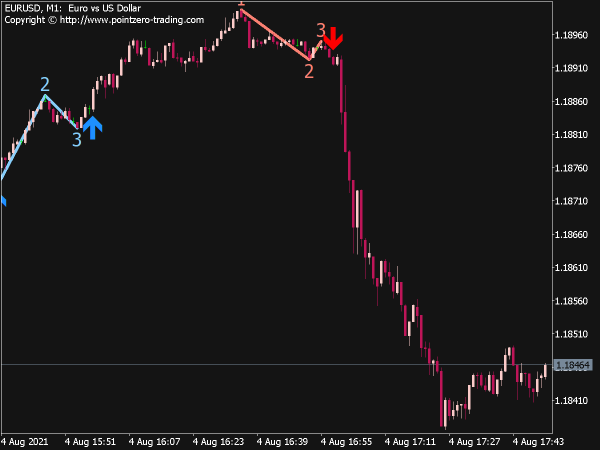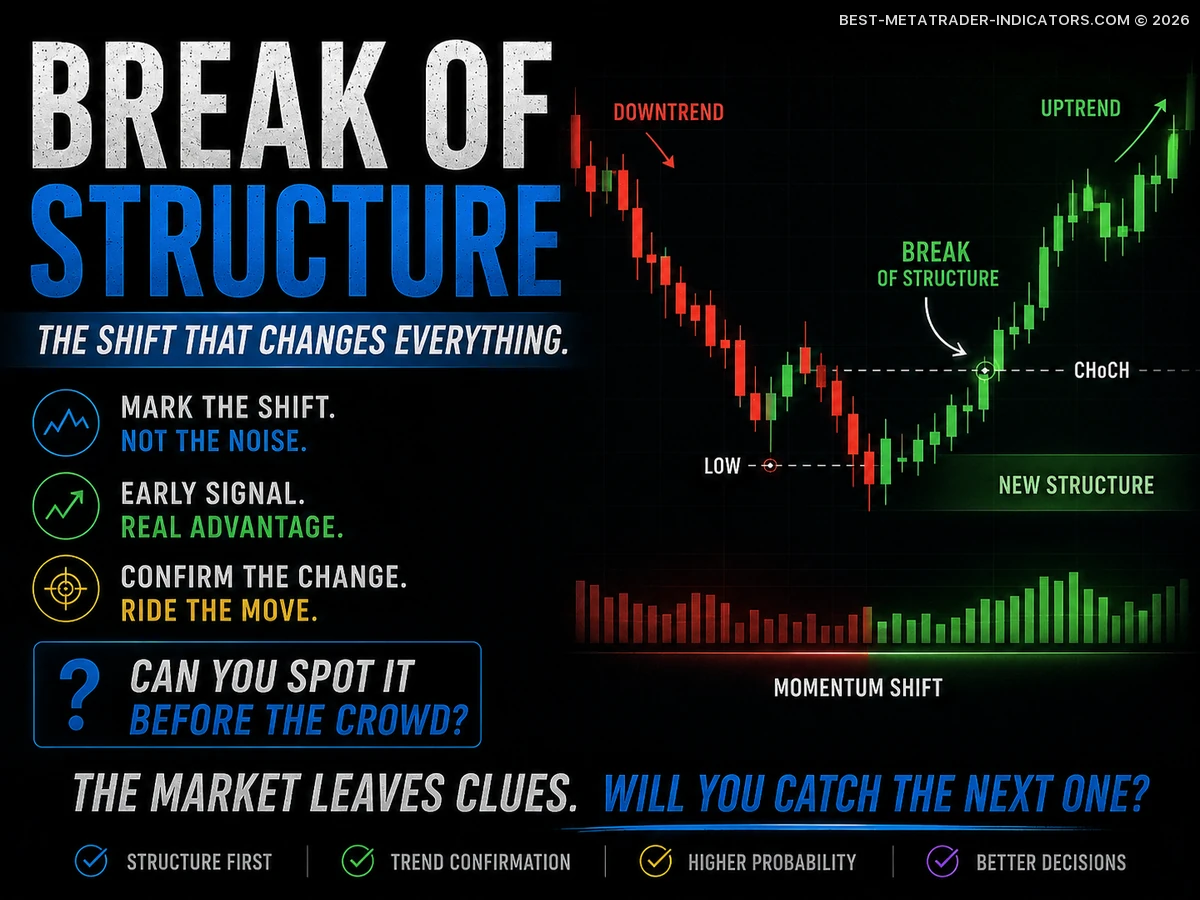
Break of Structure, often shortened to BOS, is one of the most practical concepts in technical analysis because it helps traders spot the moment price stops respecting its previous rhythm. In simple terms, a bullish BOS forms when price breaks above a previous structural high. A bearish BOS forms when price breaks below a previous structural low.
Yet the real value is not in the break alone. The edge comes from understanding where the break happens, what created it, and whether the move has real intent behind it. Many traders treat every broken high or low as a signal. Experienced traders slow down, read the context, and become far more selective.
🧠 What Break of Structure Really Means
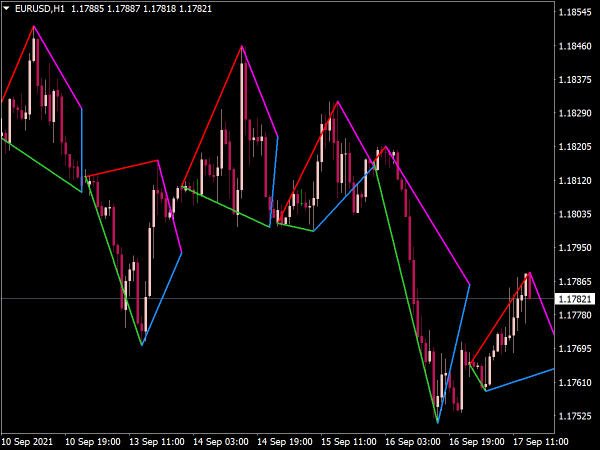
A market structure is built from swing highs and swing lows. In an uptrend, price normally prints higher highs and higher lows. In a downtrend, price prints lower highs and lower lows. A Break of Structure appears when that sequence is interrupted or extended with enough strength to suggest that traders are repricing the market.
For forex traders, BOS can be used on almost any pair and timeframe, but the signal becomes much cleaner when it aligns with liquidity, session timing, higher timeframe direction, and visible displacement. Without that context, a BOS can easily become just another breakout that looks good for a few candles and then fails.
Professional note: A clean BOS is not just a candle poking above a wick. The better signal is usually a decisive close, a strong candle body, or fast expansion away from the broken level.
📊 Bullish vs Bearish Break of Structure
| Type | What Happens | Trader Interpretation | Common Mistake |
|---|---|---|---|
| Bullish BOS | Price breaks above a previous swing high. | Buyers may be taking control or continuing the trend. | Buying too late after the impulse is already exhausted. |
| Bearish BOS | Price breaks below a previous swing low. | Sellers may be taking control or continuing the trend. | Selling directly into support or after liquidity has already been taken. |
| Internal BOS | A minor structure level breaks inside a larger range. | Useful for early entry planning, but less powerful on its own. | Treating small timeframe noise like major structure. |
| External BOS | A major high or low from the larger structure breaks. | Often more meaningful for directional bias. | Ignoring how far price has already travelled before the break. |
🔍 How to Identify a Valid Break of Structure
A valid Break of Structure should be obvious enough that you do not need to force it. If you have to zoom in aggressively, adjust the chart, or argue with every wick, the setup is probably weak.
1. Mark the real swing points
Use clear highs and lows that caused a visible reaction. Avoid marking every tiny candle wick as structure, especially on lower timeframes where noise can distort the real picture.
2. Wait for displacement
A strong BOS often comes with fast movement, large candle bodies, and limited overlap. This tells you the break was not just random movement around a level.
3. Check the close
A candle close beyond the structural level is usually more reliable than a wick-only break, especially around major liquidity zones where false moves are common.
4. Compare higher timeframes
A 5-minute BOS against the 4-hour trend can work, but it needs tighter management. Alignment with higher timeframe structure is usually cleaner and easier to trade.
⚡ Break of Structure Trading Strategy
The strongest BOS trades usually do not come from chasing the breakout candle. They come from waiting for price to break structure, pull back into a logical area, and then show confirmation before continuation.
Simple BOS Pullback Model
- Identify the current trend using the higher timeframe.
- Mark the latest important swing high or swing low.
- Wait for price to break that level with a strong close.
- Do not enter immediately after a large impulse candle.
- Wait for a pullback into a demand zone, supply zone, order block, or fair value gap.
- Look for lower timeframe confirmation before entry.
- Place the stop loss beyond the invalidation point, not randomly inside the structure.
- Target the next liquidity area, previous high, previous low, or a clean risk-to-reward objective.
🧩 BOS, CHoCH and Liquidity: Do Not Mix Them Up
Break of Structure is often confused with Change of Character. The two concepts are related, but they do not always mean the same thing. A CHoCH often signals a possible early shift in behavior, while BOS usually confirms that structure has continued or changed more clearly.
Use this comparison when the chart looks messy and you are unsure whether price is shifting, continuing, or simply hunting liquidity before the next move.
| Concept | Main Meaning | Best Use | Risk |
|---|---|---|---|
| Break of StructureBOS | Price breaks an important high or low. | Trend continuation or confirmed structural shift. | False breakout if liquidity was swept first. |
| Change of CharacterCHoCH | Price behavior starts changing after a trend leg. | Early reversal warning or transition signal. | Too early without confirmation. |
| Liquidity SweepStop hunt | Price raids highs or lows and reverses quickly. | Finding traps before real direction appears. | Entering before the sweep is confirmed. |
📈 Practical Entry Ideas After a BOS
There are several ways to trade after a Break of Structure. The right one depends on the trader’s style, risk tolerance, timeframe, and ability to wait for a cleaner entry instead of reacting emotionally to the first impulse.
Pullback Entry
Wait for price to return to the broken structure area. This gives a cleaner entry and often improves risk-to-reward because the stop can be placed around a more logical invalidation point.
Order Block Entry
After BOS, mark the last opposing candle before the impulse. This zone can become a high-interest reaction area if price returns with controlled momentum.
FVG Entry
If the BOS creates an imbalance, price may retrace into the fair value gap before continuing in the new direction. The key is to avoid entering before price reaches a logical area.
🛡️ Stop Loss and Take Profit Planning
Risk management decides whether a BOS strategy survives real market conditions. A beautiful structure break means very little if the stop loss is placed where normal volatility can easily hit it.
Common stop loss mistake
Many traders place the stop loss just above or below the entry candle. That may look tight, but it often ignores the real invalidation level. A better stop usually goes beyond the swing, zone, or structure that would prove the trade idea wrong.
| Trade Plan Element | Professional Approach |
|---|---|
| Stop Loss | Place it beyond the structure that invalidates the setup, not at a random number of pips. |
| Take Profit 1 | Use the nearest liquidity pool or previous swing level for partial profit. |
| Take Profit 2 | Target the next higher timeframe level if momentum remains strong. |
| Risk Per Trade | Keep risk fixed and modest. Do not increase lot size just because the structure looks clean. |
✅ Break of Structure Checklist
- Is the broken level a real swing high or swing low?
- Did price close beyond the structure, or was it only a wick?
- Was there strong displacement after the break?
- Is the BOS aligned with the higher timeframe bias?
- Was liquidity swept before the break?
- Is there a clean pullback zone for entry?
- Does the stop loss sit beyond a logical invalidation point?
- Is the target based on liquidity or structure rather than hope?
💡 Tips From Real Chart Experience
Do not chase the first candle
The breakout candle often looks obvious after it closes. Entering late can put your stop loss in the wrong place and damage the trade’s risk profile before the position even has room to develop.
Context beats pattern
A BOS near London or New York session liquidity often carries more meaning than a random break during slow market hours. The same pattern can have a very different value depending on where and when it appears.
Separate continuation from reversal
In an existing trend, BOS may simply confirm continuation. Near major extremes, it may signal a deeper shift. The location of the break matters as much as the break itself.
Use fewer levels
Too many structure lines make every move look important. Focus on levels that clearly created movement, because those are the areas other traders are more likely to respect.
🧭 Best Timeframes for BOS Trading
Break of Structure can appear on every timeframe, but not every BOS deserves attention. A lower timeframe BOS is useful for entries, while a higher timeframe BOS is more useful for directional bias and major structural decisions.
| Timeframe | Best Use | Trader Type |
|---|---|---|
| 1M – 5M | Entry confirmation after higher timeframe setup. | Scalpers |
| 15M – 1H | Intraday structure, pullbacks, and continuation signals. | Day traders |
| 4H – Daily | Main bias, major structural changes, and swing targets. | Swing traders |
❓ Break of Structure FAQ
Is Break of Structure a buy or sell signal?
Not by itself. BOS is a market structure clue. It becomes a trade setup only when combined with context, pullback zones, confirmation, and risk management.
Does a wick count as BOS?
Sometimes, but a candle close beyond structure is usually cleaner. Wick-only breaks often represent liquidity grabs rather than true continuation.
Can beginners use BOS?
Yes, but beginners should start on higher timeframes first. Lower timeframe structure can be noisy and emotionally difficult to trade.
Which pairs work best with BOS?
Major forex pairs such as EUR/USD, GBP/USD, USD/JPY, and XAU/USD often provide cleaner structure because they usually have strong liquidity.
🏁 Final Thoughts: Read the Break, Then Wait
Break of Structure is powerful because it shows when price is changing its relationship with previous highs and lows. But the best traders do not treat every break as an entry. They wait for confirmation, study the pullback, define invalidation, and only take the trade when the risk makes sense.
Used correctly, BOS can become a clean framework for reading trend continuation, reversals, liquidity shifts, and high-probability pullback entries. Used carelessly, it becomes just another reason to chase candles. The difference is patience.
Risk Disclaimer: Trading forex, CFDs, and leveraged markets involves significant risk. Break of Structure analysis can improve decision-making, but it does not guarantee profitable results. Always use a defined stop loss, control position size, and trade only with capital you can afford to risk.